
A conversation with Wayne Marhelski on value stream mapping, the execution gap, and why value leaks in the PE hold
A private-equity value-creation plan is usually right. The strategy is sound, the initiatives make sense, the numbers add up on the slide. Where it comes apart is two levels below the deck — in the handoffs, the queues, and the processes nobody ever agreed on. That gap between a good plan and a captured result is the thing Wayne Marhelski has spent thirty years closing.
Wayne is an electrical engineer who moved into operations, led five private-equity turnarounds across five different industries, and now writes The Operational Edge on where PE value actually gets realized. His 2010 dissertation argued that lean manufacturing drives EBITDA and benefits private equity — an idea he was “snickered at” for at the time, and one that looks a lot more obvious now.
We come at the same problem from opposite buildings. Wayne maps processes on the factory floor; at Digital Forms we map them in the digital back office, inside claims-heavy and insurance operations. The premise of this conversation was simple: the principles are the same, the terrain is very different, so where do mapping a physical process and a digital one line up, and where do they come apart? What follows is our conversation, lightly edited for clarity.
From engineer to operator
You trained as an engineer. How did you end up focused on where operational value gets created?
My background is in engineering — I’m an electrical engineer by trade, still a bit of a recovering engineer at the end of the day. I moved into operations by a circular route, having to do a lot of different tasks. People would tell me “this is very complicated,” and the engineer in me says, well, if it’s complicated, I want to understand it. So I’ve done supply chain on a global scale, HR processes, accounting and finance.
My first experience in private equity was just before the telecom bust — we were owned by a PE firm. My first real turnaround was in 2007, and that solidified what I’d seen in lean manufacturing and the Toyota Production System: there’s a lot of opportunity here, and a lot of the time we overcomplicate things, because it’s more fun to talk about strategy than to roll up your sleeves and get your hands dirty. It’s five turnarounds now in that space. Every one a different industry, but a lot of the problems are exactly the same. So I started writing about it.
What is The Operational Edge really about, in your words?
Cutting through the waste, the noise, the excuses. A lot of what I talk about isn’t complicated. In manufacturing, the biggest piece of the value chain is usually materials — it’s not uncommon to see that single line on the income statement at 40-plus percent of total cost. A five percent improvement on cost of goods sold is a major impact on the bottom line. But it requires peeling back the onion, digging through it, and challenging the status quo, which is never popular.
Why everyone skips the map
The book you pointed me to, Learning to See by Mike Rother and John Shook — Shook was the first American manager in Toyota’s history — makes the point that everyone jumps straight to removing waste and skips the step before it: mapping the whole value stream. Why is that skipped step the one that decides success or failure?
We’re conditioned to look for the quick win. There’s nothing wrong with that — sometimes someone comes into the emergency room and you triage fast, you need a tourniquet, not a conversation about the splinter. But we get so wrapped up putting the fire out that we forget to look at what caused the fire. Whether it’s Learning to See, Six Sigma, Demand Flow Technology — whatever the method — everybody wants to skip to the end, because that’s where the juice is. Nobody wants to take the time to wash the lemon, remove the seeds. They just want the juice. We’re so busy managing day to day that we don’t step back and look at what actually needs improving.
The book is from 1999 and still holds up, yet most companies find it genuinely hard to reach the outcome the authors describe. Why?
Before you can improve, you have to accept that something isn’t optimal — that something’s wrong. That’s a hard pill. Maybe the ego’s fragile, maybe someone’s protecting a story they’ve been promoting. I’ve spent thirty years looking for a unicorn in manufacturing, something so unique nobody else replicates it, and I haven’t found it — not across different industries, segments, or company sizes. A value stream mapping exercise isn’t personal and isn’t about placing blame. We’re trying to fix a process. And human beings don’t like change. I’ve been in continuous improvement nearly my whole career, and we all still keep our habits. Look at how many people still smoke after all the years we’ve been told it’s bad. Pick any habit. What we do is ours, and we’re just not interested in modifying it.
When you get people from different departments in a room to describe the same process, how different are the versions you hear?
Every department has its own version. Some of it is terminology, some of it is where you sit. Accountants don’t speak like engineers; engineers don’t speak like salespeople. I had a conversation the other day about two divisions — Division A does an A-B-C process, Division B does X-Y-Z — and someone asked why we need a single process. Because we just spent thirty, forty minutes trying to figure out what we actually do, and it’s essentially the same process: quoting. Standardization is where improvement starts.
Does the same logic apply to AI?
Everyone’s racing to put AI on top of their operations. Does the same discipline apply — map and diagnose before you automate — or is AI a different story?
I’m a big fan of AI, and it’s still got a lot of room to grow. But throwing AI at a problem only gets you to an answer faster. It doesn’t mean the answer is correct or optimal. If you want speed, AI is your solution. The response is only as good as what you put in — the old software line, garbage in, garbage out. Good information means you’ve accurately mapped the process and defined the steps, and then you feed that into AI. Now we’re getting somewhere, closer to what the future state should be.
And if there’s confusion in the process to begin with, AI just scales the confusion.
Correct. If everybody can’t agree on what the problem is, you’re stuck. I’ll push back when someone hands me a two- or three-paragraph problem statement. If you can’t summarize a problem in one or two sentences, I’d argue you don’t really understand what the problem is.
188 seconds, 23.6 days
There’s a stat in Learning to See: a part needs 188 seconds of actual work but takes 23.6 days to get through the plant. When you walk a process end to end, is that gap usually what wakes people up?
There’s an initial period of disbelief, almost shock — you have to snap your fingers in front of their face. The pushback is “but we ship product every day.” Sure. When you feed the line, that hides things. We did one at an aerospace company where a snail would travel faster than the part moved through their assembly process. It’s easy to point a finger over that, and there are consultants who do, but I don’t believe that helps anybody. It is what it is, and that’s the purpose of the exercise: let’s change it. Create a future state where instead of a snail we’re moving at the speed of a cat, then version 3.0 a wolf, and eventually a cheetah. It’s iterative. Everybody’s got a point where they are today. The trick is how we get to where we need to be tomorrow, stabilize it, and repeat.
When we first met, you told me the trick is focusing on the gaps between the tasks, not the tasks themselves. Why does everyone instinctively want to optimize the task instead?
Because the task is tangible. Watching someone run a transaction in an MRP system, or load a part into a CNC machine — that’s something we can get our heads around. But what we’re trying to optimize is the total time through the process, from the moment the part is first picked to the moment it’s delivered. What you’ll often find is that it’s the gaps between the steps where things stagnate. How many times does something need a signature, and the one person who can sign is out of the country for two weeks? We’ve lost the time. We think in units and pieces because they’re tangible. We really need to think in terms of time — how do I shorten the time from the start to the finish of any process? That’s why people ignore what’s in between. It’s just not as in your face.
That’s exactly our world at Digital Forms. We work mostly with claims-heavy, insurance-related operations, and a claim might need four minutes of decision-making and then sit three weeks in queues and handoffs.
A hundred percent. Manufacturing is almost easier, because we’re moving parts you can pick up and see. On the business or transactional side, a lot of what’s moving is information, so it becomes more hidden. It’s sitting in somebody’s electronic queue. If you’ve got fifty emails, which one do you open first? Which has the highest priority? That’s different from three castings on the floor that all need to go through one operation. But I’d argue a claim is no different than a part moving on a production floor — it has to go through defined steps. The trick is to streamline those steps and create true flow, rather than letting it sit in a queue that gets reshuffled every time more work lands the next morning.
What lean looks like in an office
You’ve got a whole lean toolkit — takt time, pull systems, the pacemaker. How much of that transfers to office and service work, and how much is specific to a physical product moving through machines?
I don’t really distinguish between the two, because for me it’s about time either way. Manufacturing is more tangible, the admin side less so, but it’s still about speed. If we typically get a hundred invoices a week, how many does one person need to do per minute to clear that out so they can start the following week clean? One area we always focused on — usually an easy win — is month-end close. Every business has one. I’ve seen companies take a month and a half; I’ve seen fifteen to twenty days. My goal is three days. So you map it: who does this piece, who signs off, who checks the general ledger, who makes sure every invoice for the month was entered properly and on time. There should be a flow. A value stream map is really just a time-driven flow of the process.
Take a walk
If there’s one part of this mindset everyone should steal — factory floor or back office — what is it?
When I first walk into a manufacturing environment — an acquisition, or back in the consulting days — the first thing I want to do is get out of the conference room, away from the slide deck, and take a walk. A walk tells you all you need to know. And I didn’t look at what machines were running. I looked at what machines weren’t running, and where inventory was building up. If there’s a lot of work-in-process piling up between process A and process B, that drives two questions. One: is the upstream process overproducing, running faster than the downstream can consume? Two: is there a problem downstream — a less-trained person, a machine making more scrap, something running slower than it should? It’s one of those two. I’m not staring at process one or process two; I’m looking at the material sitting in the gap between them as the indicator that something isn’t optimal.
Same thing in an office. We’ve gone more digital, but back in the day, if I saw a stack of papers on someone’s accounts-payable desk, that’s a question — what’s all this sitting here for? Maybe it’s three days of work piled up because someone was out sick and nobody else did the job. Focus on the buildup. I used to throw out a dare: give me a thirty-million-dollar manufacturing company, and in a fifteen- or twenty-minute walk I can find about a million dollars in savings without breaking a sweat. It’s sitting right there.

Where value leaks in the PE hold
You write that PE problems usually trace to the entry and the hold, not the exit — value that never gets captured. Where does that value actually leak?
Think about the entry imprint. If a firm writes a bad deal and overpays, that becomes a problem that filters down to the portfolio company. Now you’ve got to push more initiatives through, at a higher scale. There’s no shortage of smart people in private equity — I’ll die on that hill. The challenge at the portco level is that those initiatives assume the organization can execute. As you go down into the organization, you find a good portion of people focused on running the business day to day. You want to dump twelve or fifteen initiatives on them — great, but who’s going to do the work?
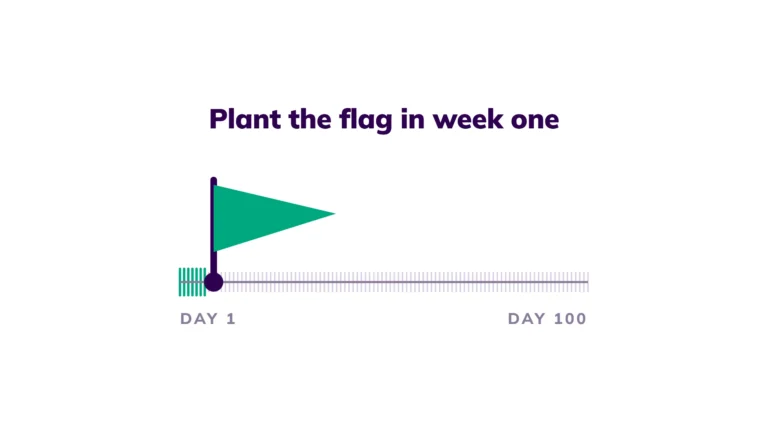
That’s where value leaks. It usually arrives as an initiative list stacked like a Gantt chart, lots of tasks in parallel. But the same people doing those tasks in parallel are the ones who need to run the operation and ship product to keep the lights on. There are only so many hours in a day. It’s the scaling and the sequencing of the initiatives. Unless you’re putting in an influx of resources, it’s better to sequence them in series — close them out, get them done, move to the next — because now you’re building on captured value. Otherwise you’ve got twelve initiatives running simultaneously and you haven’t captured anything.
So it’s a smart roadmap with real priorities — a plan sequenced to survive contact with the business — rather than squeezing everything into the first few months.
Right. And here’s where I’d challenge your listeners. People love to talk about a sense of urgency. That’s great — if a building’s burning, everyone’s got a sense of urgency. But if people aren’t running toward the fire exit, it doesn’t help. So instead of a sense of urgency, how about a sense of finishing? What we start, we finish, in as short a period as the organization can absorb. Not three steps forward and two back, where we thought we closed something out last month but Bob or Sue in the corner is still doing it the old way.
AI on a process nobody agrees on
When a portfolio company puts AI on top of a process nobody agrees on, with data that isn’t ready, what actually happens?
People are creative. If they can’t get something done, they’ll find a way. It’s not that different from installing a new MRP system — everything’s supposed to be newer and better, then they hit a roadblock, and if nobody gives them an answer, they use the hammer method and force it to work. That’s the breakdown with AI too. If it spits out an answer people don’t agree with, they may nod — because they don’t understand it themselves, or it’s not worth the fight — and then go back and do what they think is right. As long as they produce a deliverable, nobody questions how they got there. Everyone assumes the process was adopted and the information is accurate.
So when you implement a new process, there’s a learning curve, and there needs to be discipline that what people are doing is what was laid out. The premise of standard work isn’t to make people robots. It’s to create a unified process we all agree on, and from that unified process you build the improvements. Somebody — Ohno or Shingo — said without standardization there can be no improvement.
So cutting corners with AI, without a standardized process underneath, doesn’t help the process — it can create a bigger mess two or three months later.
A hundred percent. And think about that: two or three months of someone doing something different, with nobody telling them it’s wrong — so they assume it’s right and acceptable. Even when you improve a process, there needs to be an audit trail to make sure everybody’s on the same sheet of music.
Should operational readiness — call it AI readiness — be scored in diligence before a deal closes, the way financials are?
I believe that one hundred percent. When a PE firm acquires a company, I don’t think the value-creation plan is usually wrong — often it’s completely right. There’s no disagreement on what needs to be done. The disagreement is in how you envision it getting done. If a company’s underperforming, is that a team issue, a process issue, or both? If it’s a team issue, and you throw a stack of initiatives at the same team that created the current state, that doesn’t make much sense — you’re chasing your own tail. So much of what I write is that premise: smart people doing deals and writing good value-creation plans, and the execution of those plans is where firms struggle, because they’re focused on strategy and not going down the next level or two, where the tactics are and the work actually gets done.
Day one: think like a surgeon
Someone hands you a portfolio company on day one. What’s the first thing you measure to know whether value creation is even possible?
I’m an optimist, so I always think value creation is possible. The first thing I want is to understand. I think like a surgeon — you do the diagnosis, you can’t just start operating. It’s having the conversations and looking at the metrics. In a PE-owned company, your one real set of metrics is the financials. The income statement tells a story. The balance sheet — days sales outstanding, cash conversion — tells you where problems might be happening. I start with the financials because that’s what I’ll be measured on, then I ask whether I can tie those results to what I’m actually seeing on the floor. Why aren’t we hitting revenue? Either the work isn’t getting out the door, or we don’t have the backlog of sales. Same symptom, two very different causes.
The one change for PE operating partners
If you could get every PE operating partner to change one habit tomorrow, what would it be?
Step away from the slide deck and away from the C-suite, and go to the mid-level of the organization. Those are the people feeling the pain, and the ones who’ll be most honest with you if you take the time to ask. Get those people aligned and help them out, and you’ll take care of the rest. Everybody likes to play in the world of strategy — it’s fun, we brainstorm, we do the gamesmanship. But it’s the tactics that win the day. A great strategy with no execution is — I don’t even know what you’d call it. A hallucination, maybe. So focus on execution within the portco, and less on strategy with the C-suite.
Put on a pair of steel toes and go talk to the people doing the work.
Throw on a pair of jeans, get out there, and talk to the folks doing the work.
The hardest part: change management
After almost thirty years, what’s the part of this you still find hardest to crack?
The implementation of the future state. The process itself is fairly simple — you build the matrix, create the value streams, map the current state. I don’t believe in the brainstorming part; I believe you do real analysis to understand what the future state should be. But implementing it is the biggest challenge, because you’re relying on people to do the work and accept the change. Change management is hard, regardless of the methodology. We all have our habits. If it were easy, I’d challenge everyone to wake up tomorrow and change their morning routine — you’ll do it consciously for a day, but by day three you decide you don’t like putting your left leg in your pants first. Which leg goes first should have no bearing on anything, but it doesn’t feel comfortable, so you resist.
That’s the challenge with any process. You have to step into someone else’s shoes and answer the question they’re really asking: what’s in it for me? If I adopt this, how does it affect me? Maybe it’s less stress, maybe it’s safer, maybe we tie it to profit sharing because we can get more product out the door. A company with 120 people has 120 different perspectives. And it gets harder as you go up the ladder — on the information side you’re often dealing with professional roles, people with degrees, and the resistance is “I have an accounting degree, who are you as an engineer to tell me about my process?” That’s exactly where the change needs to start, because the people at the top have to emulate the change they want. At one company, every new hire spent their first week on the production floor, whatever their title. A salesperson got two weeks, because then they could actually speak to what the business does, instead of dancing around the question on the ninth hole.
Two operators, two very different floors — one moving castings, one moving claims — kept arriving at the same place. Map before you fix. Watch the gap between the tasks, not the tasks. Standardize before you automate, or AI just scales the confusion. And when the plan stalls, the answer is rarely a better strategy and almost always a closer look at who’s actually doing the work. It’s the same conclusion we keep reaching from the digital side: enterprise AI stalls on operational readiness, not model quality, and where PE value actually leaks is portfolio-company execution. Wayne has been making that case since 2010, and it travels a lot further than the factory floor.
You can follow Wayne’s writing at The Operational Edge, and connect with him on LinkedIn, where he breaks down where private-equity value really gets realized. Thanks to Wayne for the conversation.