
The hold period builds value. A sale turns that value into a price only when a buyer’s diligence team examines the operation as it actually runs and decides whether its margins are something to pay for or something to discount. EY’s Global Private Equity Exit Readiness Study 2026, which surveyed 100 GPs and 100 executives from exited portfolio companies, found that 86% of GP respondents said exit preparation improved their valuations, and that the firms reporting the strongest impact began preparing 12 to 24 months before the sale. The firms that started less than six months out saw materially weaker outcomes. Exit readiness, in other words, has a measurable payoff and a long lead time, and most of the work is operational.
That lead time is the part operating partners underestimate. The reflex is to treat exit readiness as something the bankers and the finance team assemble in the quarter before a process opens, a vendor due diligence report and a refreshed data room. Roland Berger, writing in August 2025, argues that a serious exit can no longer rest on a refreshed market slide and generic vendor diligence, and puts the real preparation window at 12 to 36 months before divestment. The reason the window is that long is that the thing a buyer discounts most heavily cannot be fixed in a quarter.
The Manual Wall shows up again at the sale
What a sophisticated buyer is really pricing is whether the margins are structural or whether they are held together by people. A portfolio company that grew revenue across the hold without removing the manual work underneath carries a cost-to-serve that rises with volume, because the growth was absorbed by hiring rather than by systems. That is the Manual Wall, the growth ceiling a business hits when headcount is doing the work automation should carry, and it does not disappear just because a sale is near. At exit it becomes a valuation problem, because a buyer modelling the next five years can see that the operating leverage is not there.
This is where the hidden operating dependency surfaces under diligence. The Human API problem, staff manually bridging systems that were never connected, is invisible on an org chart that labels those people as operations or finance. A buyer’s operational diligence is designed to find exactly this, and when it does, it reads the margin as a function of a large, growing team rather than of a well-run process. The same business, with the same revenue, is worth less when its cost base looks like a dependency than when it looks like a design.
Underneath sits the familiar gap. Nobody owned the operating model as a thing to be evidenced at exit, because during the hold the operating model was just how the business happened to run. That CDO gap, the missing owner between the finance function and the operation, is why the data room so often cannot answer the operational question a buyer asks first.
What exit readiness actually is, and when it starts
Exit readiness is the operational work that makes a portfolio company’s performance provable and its margins defensible before a sale process opens, not the assembly of a data room once it has. The distinction matters because the two happen on different clocks. A data room is built in weeks. The evidence a credible data room needs, a clean cost-to-serve per unit, cycle times that hold under scrutiny, and the automation that explains both, takes a reporting cycle or more to establish and then to demonstrate as a trend rather than a one-month improvement.
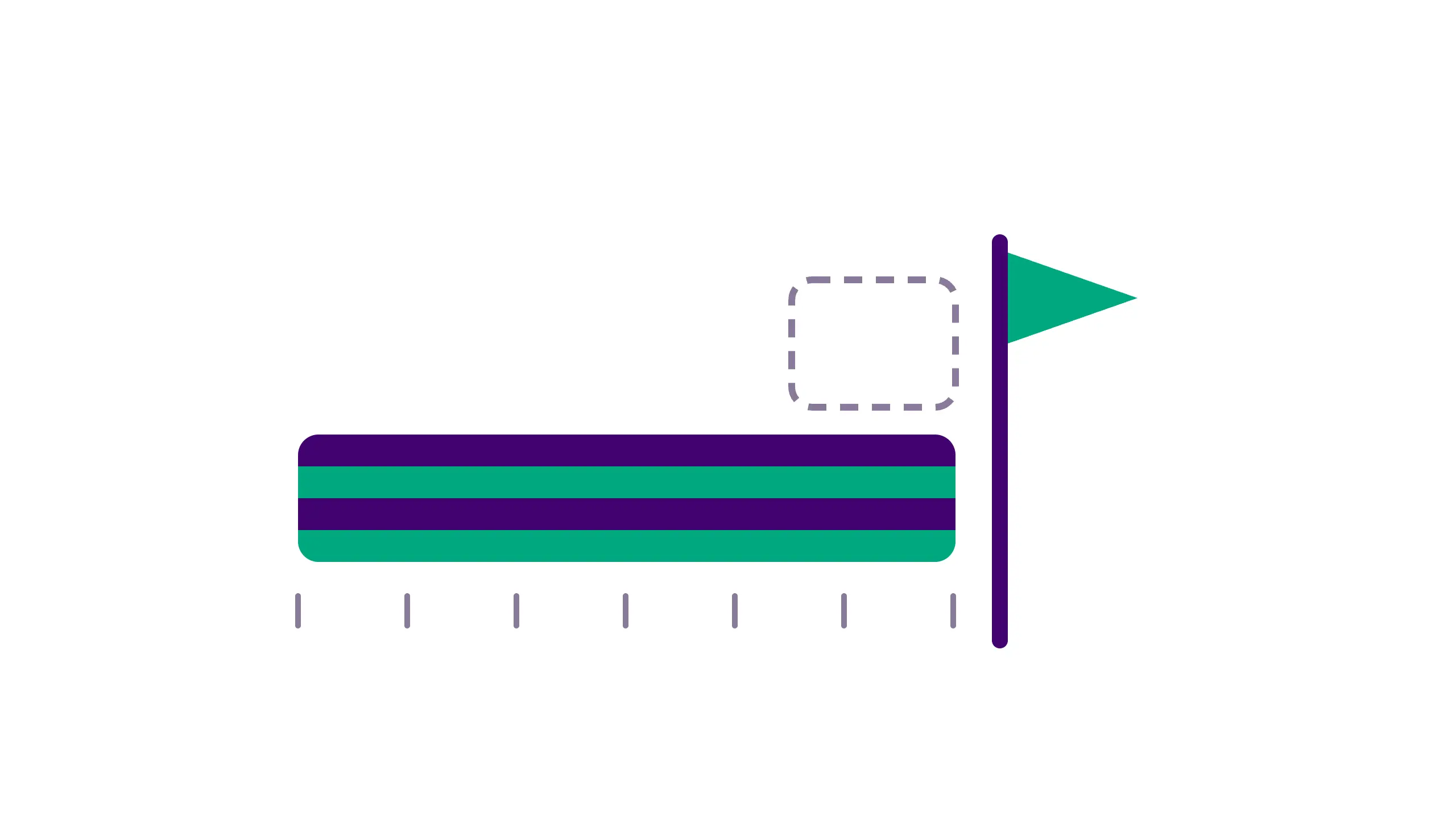
EY’s finding puts a number on the lead time: the firms that began 12 to 24 months out reported the strongest improvement in outcomes. Early preparation wins because an operational improvement has to run long enough to become a durable run-rate in the numbers a buyer will trust, which takes far longer than the quarter before a process opens. An automation shipped two months before the process looks, to a diligence team, like a cost taken out on paper rather than a changed way of working, and it gets discounted accordingly.
The sequence this creates runs opposite to the reflex. The operational work comes first and the narrative second, because the narrative is only as good as the evidence underneath it. A business that treats exit readiness as a storytelling exercise in the final quarter is left arguing for a run-rate it cannot yet prove, which is the weakest position to negotiate a multiple from.
What a buyer’s operational diligence actually probes
In a buyer’s operational diligence, the questions sort quickly into the ones that matter and the ones that are box-ticking. What matters most is whether the reported margins survive contact with how the work is really done, and the heaviest questions are the ones that separate a designed operation from a staffed one. How much of the cost-to-serve is manual, and does it scale with volume or stay flat as the business grows. What happens to cycle times during a busy period, and whether service levels hold without emergency hiring. Where the numbers in the pack come from, and whether they can be reproduced from the systems rather than assembled by hand each month.
That last point is where many otherwise strong businesses stumble, and EY’s data names it. In its study, developing a robust set of data and KPIs was the most challenging issue inside the finance function, cited by 72% of GPs in 2025 and still 60% in 2026. A business that cannot produce its own operational numbers cleanly is telling a buyer, without meaning to, that the numbers were never trustworthy enough to run the company on. The same work that would make the operation run better during the hold is the work that makes it provable at exit, which is why the gap that keeps operating partners from seeing the operation clearly during the hold is the one that makes it hard to defend at sale. We have written about why operating partners so often fly blind on portfolio operations, and a sale is where that blindness finally gets priced.
See what a buyer’s diligence will find before they do.
Our private equity work maps where a portfolio company’s margins depend on manual work, in hours and cost, and makes the run-rate provable from clean data, so the operation shows at exit as a design rather than a dependency.
How to make the run-rate provable, not just asserted
The move that protects a multiple is making the operational story true in the systems before it is told in the deck. That starts with a measurement rather than a narrative. Before a process is on the horizon, the useful thing to establish is where the cost-to-serve actually sits and what each still-manual step costs, expressed in hours and recurring cost rather than in a qualitative assessment. Surfacing exactly that ranked, costed picture is what we built our Profit Leak Diagnostic to do, and at Digital Forms we sequence the work that follows in ROI order, taking the operations a buyer will probe hardest and that cost the most to run by hand first.
From there, the discipline is to ship one real improvement and let it run long enough to become a trend. Rather than a transformation programme that finishes after the process has already opened, we keep the first move tight: an Operations Sprint that automates a single high-frequency manual step and puts it live in weeks, early enough that the new run-rate shows up across a full reporting cycle before diligence ever looks. A cost-to-serve improvement that has held for four quarters is evidence, while the same improvement shown for one month is only a claim, and buyers pay for evidence.
This is the end-of-hold bookend to a discipline that should start the moment a business is acquired. We have written about standing up standalone operations after a carve-out, where the same manual work gets built in on day one of independence. A business that removed its Manual Wall early in the hold arrives at exit with the proof already in the numbers, while one that deferred it spends the final year trying to manufacture evidence it never generated.
What good exit readiness looks like with a year on the clock
A portfolio company that handles exit readiness well tends to look the same from the inside a year before a process. It knows its cost-to-serve per unit and can produce it from its systems rather than from a spreadsheet someone rebuilds each month. When a buyer’s team asks what it costs to process a unit of work and how that figure has moved over the past eight quarters, the answer comes back the same whether it is pulled from the data room or from the live system, because there is only one number and it was never assembled by hand. It has identified which parts of its operation still run on manual effort and has a dated plan for removing the ones a buyer will weight most heavily. Its operational improvements are far enough along that they read as the way the business now works rather than as adjustments made for the sale.
What that business avoids is the common ending, where the operational diligence lands once a process opens and the management team spends the exclusivity period explaining why the margins are better than the cost base suggests. The explanation might even be true, but it is worth less than a number a buyer can verify, and the gap between the two is paid for in the price. EY’s respondents, asked what they would do differently when a sale fell short of its valuation target, pointed first to preparing the management team and the operation earlier, which is the same lead-time lesson from the other direction.
None of this is about dressing the business up to look leaner than it is for the duration of a process, because the honest version is the more durable one and the only one that survives diligence: the manual work is genuinely gone, the capacity it freed has been redeployed into growth, and the run-rate the data room shows is the run-rate the business actually operates at.
What to do about it
If an exit is somewhere on the two-year horizon, the first move is to find out what a buyer’s diligence would find today, and to do it while there is still time to change the answer. That means putting a real figure against the manual work in the operation and the cost-to-serve it inflates, then ranking those by what the sale will scrutinise most and what pays back fastest during the remaining hold. The ranking doubles as the readiness plan, because the order in which the margin leaks is the order in which to fix them.
From there the work is to make one improvement real and let it season into the numbers, then the next, so that by the time a process opens the operational story is already written in the systems. The point of sequencing it this way is that each improvement both lifts the business during the hold and strengthens the evidence at exit, which is the operational version of how value creation actually compounds in private equity rather than being asserted at the end. A year is enough time to do this properly. A quarter is only enough time to write about it.
The exit process will test whether the margins are real either way. The choice an operating partner has is whether that test happens on evidence the business has already generated, or on a story it is still trying to prove while a buyer’s diligence team quietly builds the counter-argument from the same numbers.