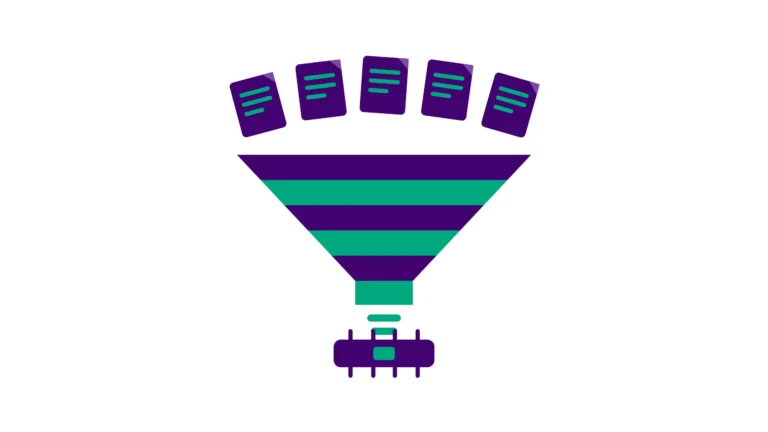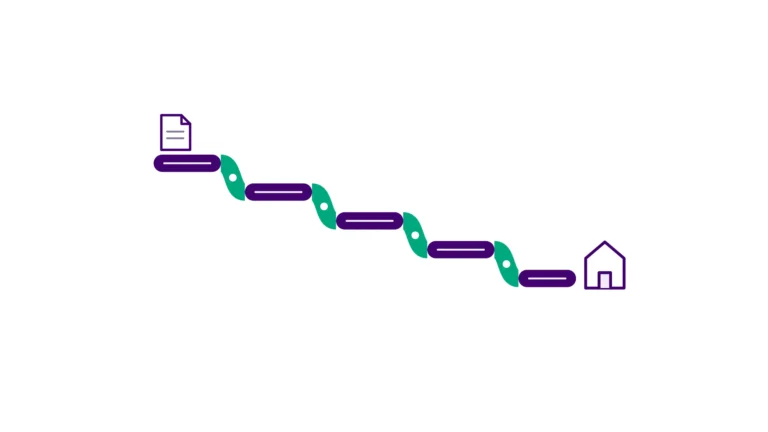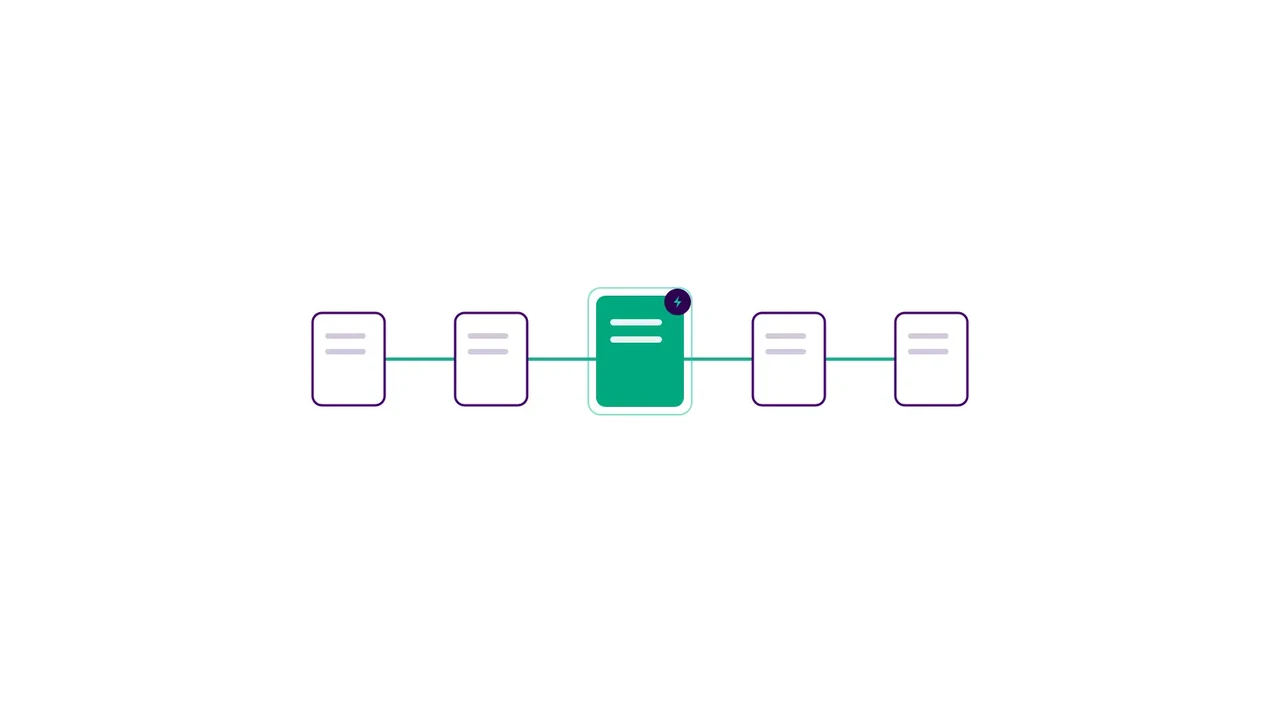

An auto claim comes in on a Tuesday morning. Before an adjuster makes a single coverage decision, the file has already been keyed into a first notice of loss (FNOL) portal, copied into a claims management system, checked against a policy database, and logged for reserves in a fourth screen. Three of those four steps moved no claim toward closure. They moved data between systems that were never built to talk to each other, and a person did the moving.
Multiply that morning across every claim in the queue and you have the operational reality most mid-market carriers and third-party administrators are quietly paying for. It rarely shows up as a line item; it shows up as cost per claim that keeps drifting upward while the team works harder each quarter to hold cycle times flat.
The pressure behind this is not cyclical. Swiss Re Institute’s sigma research recorded global insured losses from natural catastrophes at USD 137 billion in 2024, the fifth consecutive year above USD 100 billion, which is a structural step change in claim volume rather than a bad-weather year that reverts. At the same time, the NAIC Unfair Claims Settlement Practices Model Act and the state prompt-payment statutes built on it put statutory clocks on acknowledgement, decision, and payment, with interest penalties attached. Volume is up and the deadlines are legally fixed. That combination is what sends operations leaders looking for “insurance claims automation” in the first place. The ones who get a return treat it as a redesign of specific steps in a claim, sequenced by what each one pays back; the ones who don’t treat it as a platform to buy, then spend a year discovering the manual work simply moved into a new system.
What is insurance claims automation?
Insurance claims automation is the redesign of a claim’s workflow so that the repetitive, rules-based work between systems is handled by software instead of by an adjuster acting as a bridge. It is not a single product you buy, and it does not apply evenly across a file. A claim is a regulated case file, and different parts of it reward automation very differently, much as they do one step upstream in underwriting, where the submission is its own regulated case file. The common miscue is to reach for a new claims platform: replacing the system of record rarely touches the manual work, because the cost lives in the handoffs between systems, not inside any one of them.
In practice the term covers three distinct layers, and conflating them is where most vendor conversations go wrong:
- Workflow automation moves a case between systems in a governed sequence, routing an FNOL to the right queue and opening the reserve task the moment intake is complete.
- Robotic process automation (RPA) performs the repetitive keystrokes: re-entering the same claimant data across systems and generating the standard acknowledgement letters that go out on every file.
- Document AI reads the unstructured content a claim carries, such as loss reports and repair estimates, and classifies it so a human isn’t retyping figures off a PDF.
A mid-market claim typically moves through eight to twelve defined steps and touches five or more disconnected systems from first notice of loss to closure. Automation earns its place at the seams between those systems, which is exactly where Digital Forms’ wider work on claims automation as a category starts. This page is the insurance and TPA specific version of that argument: not what claims automation is in general, but what actually pays inside a property and casualty file.
What can you automate in an insurance claim, and what can’t you?
Walk a claim from intake to closure and the automation candidates sort themselves by two properties: how often the step happens, and how much judgement it demands. High-frequency, low-judgement steps are where the return sits. Low-frequency, high-judgement steps are where a human stays in the seat.
The strong candidates are the connective tissue. FNOL intake and triage, where the same details get captured and routed. The re-keying of claimant and policy data between the intake portal and the claims management system. Reserve-update logging. Status correspondence to policyholders and providers. Compliance-document generation and the audit trail regulators expect. None of these require a coverage opinion, and all of them repeat hundreds of times a month per adjuster, which is the definition of the Human API problem: skilled staff spending their day as the integration layer between tools that should exchange data directly.
The weak candidates are the decisions. Coverage determination on a non-standard loss, complex liability apportionment, and the negotiation on a disputed claim all turn on judgement that doesn’t reduce to a rule. Automating around these steps helps, giving the adjuster a clean, complete file the moment they pick it up. Automating the decision itself is where operations get into trouble.
Two areas sit deliberately in the middle. Fraud referral and subrogation identification are genuine automation candidates at the detection and routing stage: pattern-flagging can surface a suspicious claim or a recovery opportunity and route it to the right specialist far faster than manual review. This matters at scale, because the Coalition Against Insurance Fraud’s 2022 study put US insurance fraud at USD 308.6 billion a year across all lines, roughly USD 45 billion of it in property and casualty. But the specialist’s judgement on whether to pursue the referral stays with a person. The software finds and routes; the human decides.
Workflow automation, RPA, or document AI: which does the work?
You don’t pick one of these three layers; you sequence all three by what they return, and the order matters more than the label. The reason they get sold interchangeably is that each vendor leads with the one it happens to build.
RPA usually earns its place first, because the return is immediate and countable. The same claimant details get typed into the intake portal, then re-typed into the claims management system before an adjuster has assessed anything, and that re-keying alone can cost the better part of an hour a day. An RPA bot that does the same data entry hands that hour back on day one. Workflow automation is the larger commitment: it’s what stops a total-loss auto claim sitting unrouted in a queue for two days because no one triggered the salvage task, and what enforces the compliance sequence an auditor will later check. Document AI is the specialist layer, worth its cost where a claim arrives as paper, reading the loss reports and repair estimates an adjuster otherwise transcribes by hand before any assessment can start.
Sequencing them by return, rather than by whichever platform a vendor is keenest to sell, is the difference between a project that funds itself and one that stalls in year two, the same trap the insurance claims processing bottleneck creates when carriers respond to the ceiling by hiring instead of redesigning.

What is straight-through processing, and where does it actually apply?
Straight-through processing (STP) is the case a claim closes end to end with no human touch, with intake, validation, decision, and payment handled entirely by rules and data. It is real, and for the right claims it is transformative. It is also oversold, and the oversell is expensive.
STP works on low-value, high-volume claims that meet clear, checkable conditions, such as a small auto-glass claim or a routine benefit payment inside defined limits. Push it beyond that boundary, onto claims with real ambiguity or dispute potential, and leakage and rework rise faster than the labour saved. The honest scope question is which slice of your book genuinely qualifies.
| STP-eligible claims | Adjuster-required claims |
|---|---|
| Low value, within fixed limits | High value or reserve-sensitive |
| Rules fully checkable from data | Judgement on coverage or liability |
| High volume, repetitive pattern | Low frequency, non-standard facts |
| Low dispute likelihood | Litigation or negotiation potential |
McKinsey’s Insurance 2030 analysis projects that a substantial share of claims-handling activity could move to automated or straight-through handling by the end of the decade. That direction of travel is credible, but “substantial share” is not “all claims,” and the operations that get burned are the ones that treated STP as a target for the whole book rather than for the segment that fits it.
How do you decide which claims workflows to automate first?
The prioritisation question is where most carriers get the sequence backwards. The instinct is to start with the most visible pain or the newest platform. The discipline that actually returns money is to sequence in ROI order: automate the step that returns the most adjuster time relative to its build effort, then let that saving fund the next build.
That ordering is what keeps claims automation from becoming another multi-year transformation programme that shows nothing until it shows everything. A first diagnostic pass on a mid-market claims operation usually surfaces four to six candidates worth building, and they are almost never the ones the team expected. The highest return is often hiding in an unglamorous re-keying step that every adjuster repeats dozens of times a day, not in the sophisticated adjudication tool the last vendor demo focused on.
Sequencing this way is also what makes the numbers legible to a CFO. When each build is scoped to a measurable saving in cost per claim, cycle time, or manual touches per file, the roadmap reads as a series of funded steps rather than a lump-sum bet. That is the same logic behind our approach to reducing the manual work that costs the most before you add headcount: find the most expensive manual work and remove it in return order, building only what pays.
What does insurance claims automation actually return?
The return shows up in three places on a claims P&L, and the first one is the one boards watch. Cost per claim in a well-run operation should fall as volume grows; when it rises year on year, the operation is scaling people rather than productivity, and removing manual touches is what bends the line back down. On a book processing meaningful volume, shaving even a few dollars off the fully-loaded cost of a claim compounds into seven-figure annual margin without a single new hire.
The second is cycle time, and it is not only a cost story. J.D. Power’s US claims satisfaction research consistently ties settlement speed to customer satisfaction and, downstream, to retention and renewal. A faster claim is a cheaper claim and a stickier policyholder at the same time, which is why cycle time belongs in a renewal-economics conversation, not just an operations review.
The third is compliance headroom. When acknowledgement, decision, and payment steps carry statutory deadlines with interest penalties, automating the correspondence and audit trail turns a recurring exposure into a controlled process. The teams that break through here look a lot like the ones in our Quick Wins work: a specific, measurable improvement live in production within weeks, not a three-year platform migration that a new compliance rule outdates before it ships.
One boundary worth naming: insurance claims automation and healthcare-payer claims automation share the same manual-handoff anatomy but answer to different clocks. A health payer is racing the CMS Interoperability and Prior Authorization Final Rule (CMS-0057-F), which mandates API-based prior authorization on a fixed timeline running through 2027; a P&C carrier is racing catastrophe volume and state prompt-pay law. The playbook rhymes; the regulatory driver does not.
Where to start
If the patterns here are familiar, the useful first move is not a software RFP. It is a diagnostic that maps a real claim end to end, every step and every screen and every point where an adjuster is bridging two systems by hand, and quantifies what each manual step is actually costing. That map is what tells you which four to six workflows to build first and in what order. Our Manual Wall Calculator is a way to put a first number on that cost before any deeper work begins.
From there the path is deliberately staged rather than all-at-once. A Profit Leak Diagnostic ranks where the operation is bleeding cost and puts a figure on each issue. An Operations Sprint then builds the highest-return automation as fixed-price, working software, with the first ROI visible inside the sprint itself and one pain area handled at a time. The larger roadmap and any ongoing ownership come after there’s proof on the board, not before. If you want that path run on your own desk, our claims automation service for P&C insurers and TPAs is where the diagnostic, the sprint, and embedded delivery come together.
The carriers and TPAs that clear this ceiling do it not by buying a bigger platform or approving another hiring round, but by treating the claim as an operation to be redesigned in return order, starting small enough that the first result pays for the second. The question worth putting to your own numbers this quarter is a plain one: what is a claim actually costing you to move from intake to closure, and how much of that cost is a person doing work that a system should be doing instead? A Profit Leak Diagnostic answers exactly that, in two weeks.