
In Deloitte’s 2025 Global Business Services survey, published in August 2025, principal Kort Syverson put the problem more bluntly than most operating partners would in a board deck: “cost is a deteriorating value proposition.” The same survey found roughly half of the organisations it polled had already taken more than 20% of cost out through their shared-services operations. Read those two findings together and the message for a private equity portfolio company shared services programme is uncomfortable. The easy savings have mostly been banked, and the people who run these centres are now telling you the cost story is running out of road.
That matters because shared services is still sold into portfolios as a cost lever first. A sponsor consolidates finance, HR, and procurement for several portfolio companies into one centre, moves the work to a lower-cost location, and models the saving. The saving is real for a year or two. Then the centre stalls, and the reason it stalls is rarely the thing the business case measured.
A centre built on disconnected systems relocates the manual work rather than removing it
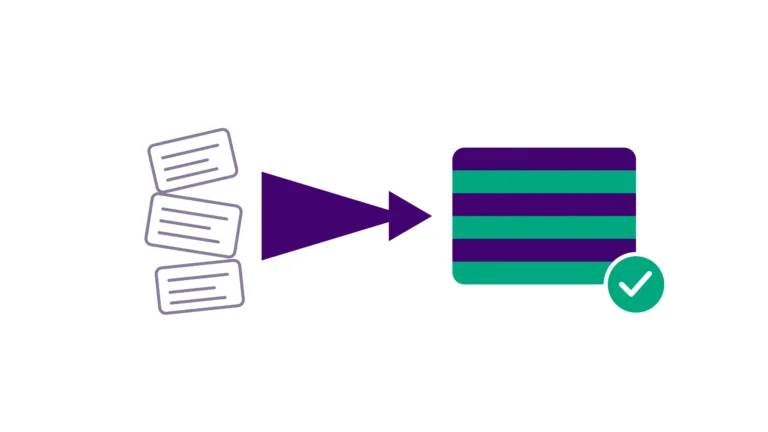
The claim is simple and it runs against how most of these programmes are scoped. Moving a team to a shared-services centre changes where the work sits, not whether the work flows. If the three systems that team touches still don’t talk to each other, the centre inherits the same job the local finance clerks had: keying the same invoice, the same policy number, the same employee record into one system after another by hand. We call that the Human API problem, and a shared-services centre is one of the most efficient ways to industrialise it.
EY’s own 2025 analysis of shared-service platforms in private equity, written by its global business services lead Kunal Ghatak, projects five-year savings of 50% to 60% from labour arbitrage and a further 12% to 18% from automation and digitisation. The labour-arbitrage half of that arrives on day one, because it is just a wage differential. The automation half only arrives if someone removes the handoffs, and that is the half most programmes defer. A centre that captures the arbitrage and skips the plumbing hits a ceiling the moment volume grows, because every new transaction still needs a human to carry it between systems.
The consequence shows up in the one number a sponsor should care about and the business case usually ignores: cost-to-serve per transaction. When the work is re-keyed rather than integrated, cost-to-serve flattens after the arbitrage year and then climbs again as the centre adds headcount to keep up. The team got cheaper per hour, but the work still takes the same number of hours, so the saving lands in the wage line rather than anywhere the customer or the P&L can feel it.
Put the saving against the line it belongs to, not the minutes it removes
This is where most shared-services business cases quietly mislead. They count minutes saved on a task and present the annualised figure as the prize, without setting it against the elapsed time the customer or the P&L actually feels. A six-minute saving on a task that sits inside a nine-day cycle is a rounding error on the thing that matters, and the arithmetic makes that concrete.
The recovered capacity is worth having, and $216,000 a year is not nothing in a mid-market portfolio company. The point is that it buys you almost none of the cycle-time improvement the centre was supposed to deliver, because the nine days are spent waiting in the handoffs between systems, not working the invoice. A better portfolio report than cost-per-centre is the share of a named workflow’s hours a system now carries, with the dollar value of those hours beside it, because that number tracks the work instead of the location.
Build a captive centre, buy a point tool, or make the work flow
A sponsor weighing how to fix a lagging portfolio company usually has two options on the table, and both tend to leave the handoffs exactly where they were. The first is to build or expand a captive shared-services centre, which relocates the work and captures the wage differential while the re-keying survives intact. The second is to buy a point tool for the worst function, which automates one step inside a process whose delay lives in the gaps between steps, so the tool shaves minutes off a task that was never the bottleneck.
The third option is less visible because nobody sells it as a product. It is to map the actual flow of a high-volume workflow end to end, find the points where a person is bridging two systems by hand, and remove those specific handoffs before deciding what to centralise or what to buy. At Digital Forms we sequence that work in ROI order, biggest recoverable cost first, so the first change is live and paying for itself before the second is scoped. When the first move needs to land fast, an Operations Sprint puts one integrated workflow into production in a matter of weeks, which is usually enough to show the board whether the flow problem is as large as the diagnostic says. Surfacing exactly where that recoverable cost sits is what we built our Profit Leak Diagnostic to do.

Where the EBITDA actually shows up, and how a buyer prices it
Operational savings only matter to a sponsor once they reach EBITDA and survive the diligence of the next buyer, so it is worth tracing the shared-services lever all the way through. A pound of cost removed from a portfolio company lifts EBITDA by a pound, and at exit that pound is worth the multiple. A trade buyer pays the same multiple on a larger EBITDA, while a sponsor buying for growth may pay more for a business that can absorb the next wave of volume without the next round of hiring. The second buyer is the one who rewards flow, because flow is what lets the business scale revenue without scaling the cost base underneath it.
That distinction changes what a shared-services programme should be optimised for. A centre scoped purely for arbitrage presents to a buyer as a cost that has already been taken out, which is a one-time gain the buyer will not pay a premium to inherit. A portfolio company whose shared-services team demonstrably carries more volume each quarter on the same headcount presents as a business whose cost base scales slower than its revenue, which a growth buyer underwrites more easily because the trend is visible in the numbers.
Framing the gain as capacity for growth rather than headcount removed is not a presentational choice, it is what an operating partner wants on an investment committee memo. Eight hires avoided reads as a layoff waiting to happen; the same eight hires redirected into next year’s volume reads as a business that found a gear. The arithmetic is identical and the story a buyer will pay for is not.
Why portfolios stand up the centre and skip the plumbing
If removing the handoffs is the higher-value move, the fair question is why so few portfolio companies do it first. The honest answer is about incentives, not competence. The person who owns the shared-services centre is usually measured on uptime and on cost per transaction against last year, and both of those targets are met by keeping the current process running smoothly rather than by retiring the process. Integrating two systems is a project with a risk of disruption attached; running the existing manual workaround is safe and invisible. Few people are rewarded for volunteering to take the disruption.
There is something true in the caution, and it is worth granting. A badly sequenced integration can stall a centre that was at least functioning, and an operating partner who has watched one go wrong is right to be wary of the next one. The loss comes only when that wariness hardens into never touching the flow at all, because the manual handoffs do not stay still; they compound as volume grows and as each new system is bolted on without a connection to the last. The centre that looked efficient at acquisition is carrying more hidden manual load at every subsequent board meeting.
The test worth running before you scope the next centre
The cleanest test of a shared-services case is the operating plan itself. If next year’s volume forecast already funds new hiring in the centre, the case should state how much of that volume the existing team could absorb if the two or three worst handoffs were removed, expressed in hours and in dollars. That single question reframes the programme from a cost exercise into a capacity one, and it is answerable with the data most portfolio companies already have.
Run it honestly and one of two things happens. Either the handoffs are small and the centralisation case stands on its own, which is a clean answer worth having. Or the handoffs are large, in which case the sequence inverts: fix the flow first so the centre you build or expand is carrying integrated work rather than industrialising the re-keying. That sequencing decision, owned by someone accountable for the business outcome rather than for keeping the lights on, is what we mean by External CDO as a Service, and it is the same discipline that sits underneath a credible private equity value creation plan.
Shared services will keep earning its place in portfolio operations, because consolidation and a lower-cost location are genuine advantages. What it cannot do by itself is make a portfolio company scale, and the sponsors who get the most from it are the ones who fix how the work flows before they decide where it should sit.