
In the first quarter of 2026, the national mortgage delinquency rate climbed to 4.44%, up 40 basis points from a year earlier, according to the Mortgage Bankers Association’s National Delinquency Survey. For a mid-market servicer, a number like that does not land as an economic abstraction. It lands as a loss-mitigation queue that got longer overnight, and as a staffing conversation about how many analysts you need to hire to work it before the regulatory clock runs out.
The servicing operation that scales by headcount
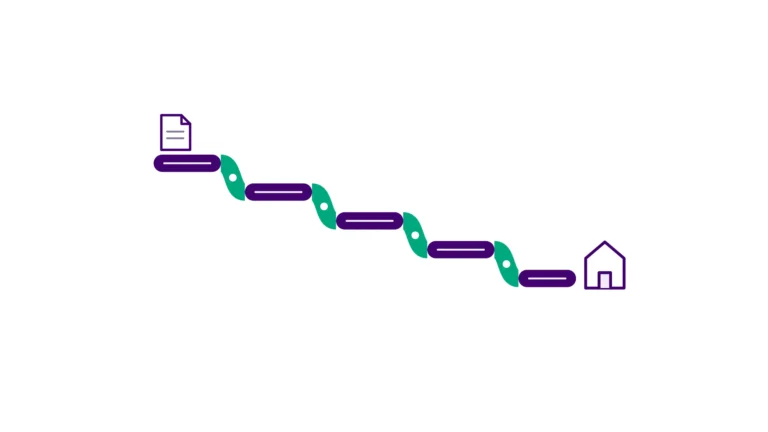
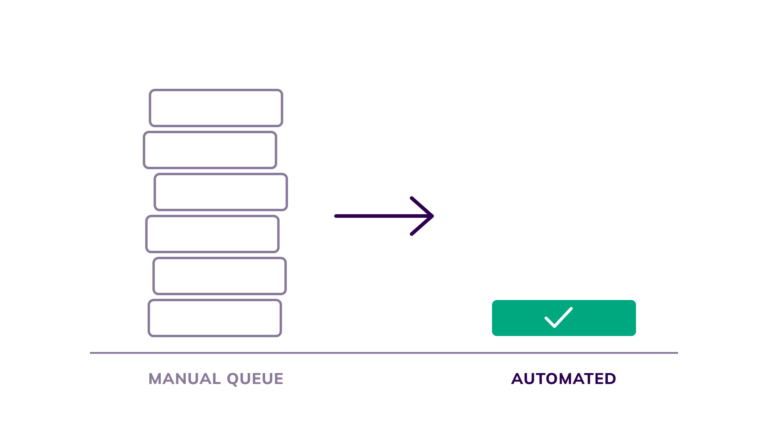
That staffing conversation is where the underlying problem shows itself. When a servicer’s answer to rising volume is a hiring plan for the default and loss-mitigation desk, the operation has hit what we call the Manual Wall: the point where throughput is limited by how many trained people you can put on the queue, because the work itself was never built to move without them. Mortgage servicing hits this wall hard, and for a structural reason. Every loan workout, the core of what the industry calls default servicing, whether it is a forbearance plan, a repayment agreement, a modification, or a short sale, is a regulated case file with mandatory documentation and a defined sequence of steps. A person opens it, gathers the borrower’s financials, logs into the servicing system of record, cross-checks investor guidelines, updates the compliance tracker, and moves the file to the next status. Multiply that by a portfolio, and the shape of the cost base is a room full of analysts.
This is the same pattern that shows up in insurance and healthcare claims, where each claim is a regulated file worked by hand through a compliance sequence. We have written about the mechanics of it in the context of claims automation, and mortgage servicing is the same problem wearing a different regulatory coat. The vocabulary changes from adjudication to loss mitigation, the regulator changes from a state insurance department to the CFPB, but the operational signature is identical: volume is served by people, and people are the thing that scales linearly with volume.
Why the timing matters now
The reason this is worth acting on in 2026 rather than filing under “someday” is that the regulatory clock is getting shorter and less forgiving, not longer. Under RESPA’s Regulation X, a servicer that receives a loss-mitigation application has five business days to acknowledge it in writing, and where a complete application arrives more than 37 days before a scheduled foreclosure sale, 30 days to evaluate the borrower for every available option and issue a written decision. Those windows do not flex when your queue triples. A hailstorm of delinquencies does not buy you an extension. If the volume rises and the process is manual, you either add people fast enough to hold the timelines or you start missing them, and missed loss-mitigation deadlines are exactly the kind of thing that turns into regulatory findings and repurchase risk.
On top of the existing rules, the CFPB’s proposed rule “Streamlining Mortgage Servicing for Borrowers Experiencing Payment Difficulties,” published in July 2024, would rework Regulation X’s loss-mitigation framework substantially. It removes much of the current complete-application machinery and requires servicers to extend foreclosure procedural safeguards as soon as a borrower asks for help, along with new language-access obligations. The final rule has not landed yet, and it remains one of the most significant items on the Bureau’s mortgage agenda heading into 2026. A servicer whose loss-mitigation process is a stack of manual steps and analyst judgment calls will feel a framework change like that as a scramble, while a servicer whose process is defined in software absorbs the same change as a configuration update.
Why does mortgage servicing stay so manual?
It stays manual because it grew that way, and because for a long time headcount was the only lever anyone reached for. Servicing platforms of record are good at holding the loan and moving money. They are not built to run the connective work around a workout: reading a borrower’s bank statements and pay stubs, deciding whether the file is complete, checking the specific investor or GSE guideline that applies, and keeping a defensible audit trail of every touch. So people do that work, and they do it across systems that were never designed to talk to each other.
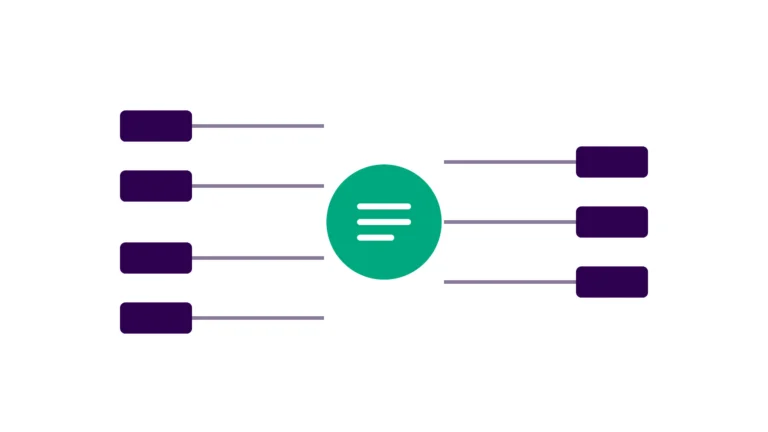
That is the Human API problem: staff are the integration layer between the servicing platform, the origination system, investor and insurer portals, and whatever spreadsheet or tracker holds the compliance calendar. A single loss-mitigation file can have someone re-keying the same borrower data into four places, because the alternative, an actual integration, was never built. The re-keying is invisible on the org chart, and shows up only as the number of analysts you need and as the error rate when one of them fatigues at the end of a long queue.
The reflex when that queue backs up is to hire, and it is worth being honest about why that reflex is so strong: hiring is fast, it is legible to a board, and it feels proportionate to the problem. We have argued at length about why adding analysts does not fix a processing bottleneck in claims, and the logic carries straight over. Headcount added to a delinquency spike is a cost you take on at the worst possible moment for margin, and it is a cost that does not leave when volume normalises, because letting trained servicing staff go the moment the queue shortens is its own operational and reputational problem.
What can actually be automated in a servicing operation
The useful question is which parts of the regulated case file are repetitive and rule-governed, the same question that drives underwriting automation in insurance enough to hand to software while leaving judgment with people. Automating the whole operation in one move is neither possible nor wise, so the real work is choosing the right first target and proving it before building.
Four kinds of work in a servicing operation consistently qualify. Document intake and classification, where borrower-submitted paperwork arrives in a dozen formats and has to be identified and routed to the right file, is now well within reach of document-processing tools. Data extraction from those documents, pulling income figures off pay stubs and bank statements into structured fields, removes a large slice of manual re-keying. Status synchronisation across systems, so that a change in the servicing platform propagates to the compliance tracker and the investor portal without a person copying it, kills the Human API work directly. And regulatory-timeline tracking, where the acknowledgment and decision clocks are calculated and monitored automatically against the RESPA windows, turns a deadline that a supervisor currently watches by hand into a system that flags the file before it breaches.
The analyst still owns the decision that matters, whether this borrower qualifies for this option under this investor’s rules. What software takes off their desk is the forty minutes of clerical work wrapped around that decision. In a typical operation, the clerical wrapper is where most of the labour hours actually sit, which is why automating it, rather than trying to automate judgment, is where the return is.
What should you automate first?
Start where the volume is highest and the rules are clearest, because that combination is where automation pays back fastest and fails least often. In most servicing shops, that means document intake and the data extraction that follows it, since every single file passes through that gate and the work is almost entirely mechanical. Fixing that one step tends to release capacity across the entire downstream process, because everything after it has been waiting on a human to key the data in.
The discipline we apply to sequencing is simple: we do not build an automation unless it removes enough manual work to justify itself, and we prove that number before writing code rather than after. That is the point of an entry Profit Leak Diagnostic, which at Digital Forms is how we quantify where the labour and the deadline risk actually concentrate in a servicing operation before anyone commits to a build. It is common to walk in assuming the modification workflow is the bottleneck and find that the real drain is document intake three steps upstream, feeding every other queue.
Once the highest-value target is identified, the right first build is deliberately narrow. We keep it to a single workflow that can go live in weeks and show a result inside the engagement, which is what an Operations Sprint is built to deliver. A servicer does not need a two-year platform programme to get the intake queue off human hands; it needs one workflow automated and measured and running in production, with the freed-up capacity and the confidence to take on the next one.
Automation or a new servicing platform?
There is a temptation, when the manual load becomes obvious, to conclude that the servicing platform is the problem and to go shopping for a replacement. Sometimes the platform genuinely is end-of-life. More often, a platform migration and a case-file automation programme are answers to two different questions, and buying the first does not deliver the second. A new system of record still needs someone to read the borrower’s documents, still needs the compliance calendar watched, and still sits alongside the investor portals that no platform vendor controls. Unless the automation of the surrounding work is designed in deliberately, a migration can move the Human API problem from an old screen to a new one without reducing the number of people doing the bridging.
The practical implication is that automation of the workout case file is worth pursuing on its own timeline, independent of whatever platform decision is or is not on the table. The work that eats analyst hours lives in the gaps between systems, and closing those gaps is a separate project from replacing any one of the systems.
What this looks like when it works
Consider the shape of it in a mid-market default-servicing operation, described as a pattern rather than a named client. The loss-mitigation desk is staffed to peak volume, analysts spend a large share of their day on document handling and re-keying rather than on borrower decisions, and a supervisor spends part of every day manually checking which files are approaching a RESPA deadline. The delinquency uptick of the last several quarters has already pushed the team to talk about another hiring round.
Automate document intake and extraction first, and the analyst’s day changes composition: the clerical wrapper shrinks and the same headcount clears more files, so the hiring conversation pauses. Add automated timeline tracking, and the supervisor’s manual deadline-watch becomes an exception queue that surfaces only the files at risk. In our experience, operations of this kind find that the majority of the hours in a workout file are clerical rather than judgment, so moving that clerical layer to software is what lets throughput rise without the payroll rising to match. The numbers vary by portfolio and we do not pretend otherwise, but the direction is consistent and the mechanism is not mysterious.
Where a servicer should start
If any of this is recognisable, the first move is measurement, ahead of any technology selection or hiring approval. Get an honest count of where the analyst hours actually go inside your workout process, which steps carry the deadline risk, and what a single file costs you to work end to end. That number is usually the thing nobody has, and putting a figure on the cost of manual work is what makes the rest of the decisions obvious.
From there, the sequencing follows the evidence: automate the highest-volume clerical step first, keep the first build narrow enough to land in weeks, measure the result against the baseline you captured, and only then decide what comes next. The discipline of proving the return before building is what separates automation that compounds from another six-figure project that quietly underdelivers. It is also what keeps the analysts you have working on the decisions only they can make, rather than on the data entry a machine should have taken off their desks a long time ago.
The delinquency rate will do what the economy tells it to do. The question worth sitting with is whether your servicing operation meets the next volume swing with a hiring plan or with a process that can absorb it.