
Picture the scene. Claims volume spikes — a weather event, a regulatory change, a newly acquired book of business. The ops team is stretched. Backlogs are growing. Hiring seems like the obvious answer.
Six months later, payroll is £400K heavier. The queue is still growing. And now there’s a new problem: nine analysts handling nine slightly different versions of the same workflow, and nobody’s quite sure which one is correct.
This is not a staffing problem. It is an insurance claims processing bottleneck masquerading as one — and the distinction matters more than most claims executives realise.
The Pattern Every TPA Operations Leader Recognises
There is a specific ceiling that mid-market claims businesses hit, usually somewhere between 200 and 600 employees. Throughput stalls. Turnaround times creep up. Costs per claim inch higher each quarter. The response, almost universally, is to add headcount.
The intuition makes sense. More claims coming in. More people needed to process them. Straightforward supply and demand.
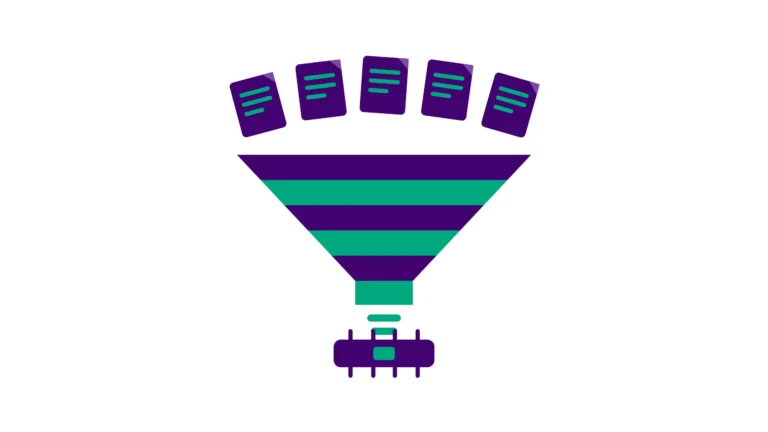
But this reasoning misses something structural. In most TPA and claims management operations, each claim isn’t just a task — it’s a regulated case file that has to move through 8 to 12 defined workflow steps, touching 5 or more disconnected systems along the way. Adjusters log into one platform for intake, a different one for reserve setting, a third for correspondence, a fourth for compliance documentation, and often a spreadsheet or shared drive somewhere in the middle to bridge the gaps between them.
The bottleneck isn’t the number of people. It’s the number of handoffs. And adding more people to a system built around manual handoffs doesn’t reduce the handoffs — it multiplies them.
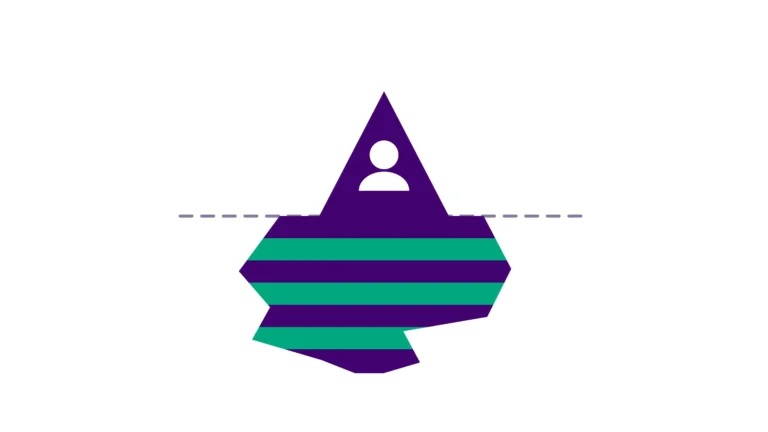
This is what we call the Manual Wall: the point at which a service company’s throughput becomes structurally limited by the volume of manual work its people can process, rather than by its commercial capacity or market opportunity. In insurance and claims operations, the Manual Wall is built into the architecture of most mid-market businesses — and it’s essentially invisible until you’re hitting it at full force.
Why Adding Analysts Makes the Problem Worse Over Time
There’s a short-term case for headcount. A new analyst, fully trained, does clear a portion of the queue. Metrics improve briefly. The pressure subsides.
But three things happen over the following 12 months that erode that gain.
Workflow fragmentation compounds. When 12 analysts each develop slightly different habits for handling claims in a system that was never designed for consistency, the process slowly diverges. By the time you have 20 analysts, you effectively have 20 workflows. Quality assurance becomes its own full-time job. Training new joiners takes longer because there’s no single correct method to teach.
Throughput scales linearly, but the ceiling doesn’t move. Each additional analyst adds a predictable, modest amount of throughput. But the underlying constraint — the architecture of manual steps — remains unchanged. The business grows its payroll bill much faster than it grows its claims-per-employee ratio. Margins compress. The cost per claim rises each year not because the team is inefficient, but because the model is.
Regulatory requirements add complexity faster than analysts can absorb it. The SECURE 2.0 Act (2022) added over 30% more compliance steps per retirement plan administration cycle. Workers’ comp regulations in most US states grow in complexity every year. CMS rule changes affect healthcare claims timelines and documentation requirements. Each new regulation adds another manual step to an already-manual process — and another reason to hire one more person to track it. The headcount spiral accelerates.
The operations leader who built a 250-person claims team by hiring through growth didn’t make bad decisions. They made rational short-term decisions inside a model that was never designed to scale. The problem isn’t the people. It’s that nobody redesigned the model.
What the Insurance Claims Processing Bottleneck Costs at the P&L Level
The Manual Wall rarely appears on a board report as a line item. It shows up as a pattern across several metrics that individually look manageable but together describe a structural problem.
Watch for these signals:
- Cost per claim rising year-on-year, even when volume is flat or growing. In a well-run operation, costs per claim should fall as volume grows. If they’re rising, the operation is scaling people, not productivity.
- Turnaround times with high variance. The average turnaround looks acceptable; the 90th percentile is damaging client relationships. High variance almost always indicates inconsistent workflows, not resource shortage.
- New hire ramp time above 90 days. When it takes 3 months to bring an analyst to full productivity, the process is undocumented and inconsistent. That ramp time is also a hidden cost: a £45,000-a-year analyst working at 50% capacity for 90 days represents £11,250 of lost productivity before they’ve contributed anything.
- Management time dominated by operational fire-fighting. When the COO and operations directors are spending more than 30% of their time resolving specific claims issues rather than running the function, the function is running them.
- Volume spikes that cause visible operational crises. When a hailstorm, a regulatory change, or a newly-acquired client causes a backlog that takes 3 months to clear, that’s a capacity model built entirely around predictable, average conditions. The insurance business is not predictable or average.
Each of these signals is worth quantifying. In a 400-person TPA, moving cost per claim from £42 to £35 — a 16% reduction — while holding headcount flat, represents £2M+ in annual margin improvement depending on claims volume. That’s not a technology project. That’s an operational redesign that happens to use technology.

What Breaking Through the Manual Wall Actually Looks Like
The claims operations that successfully break through the insurance claims processing bottleneck share a common pattern in how they approach the problem. They don’t start with technology. They start with workflow mapping.
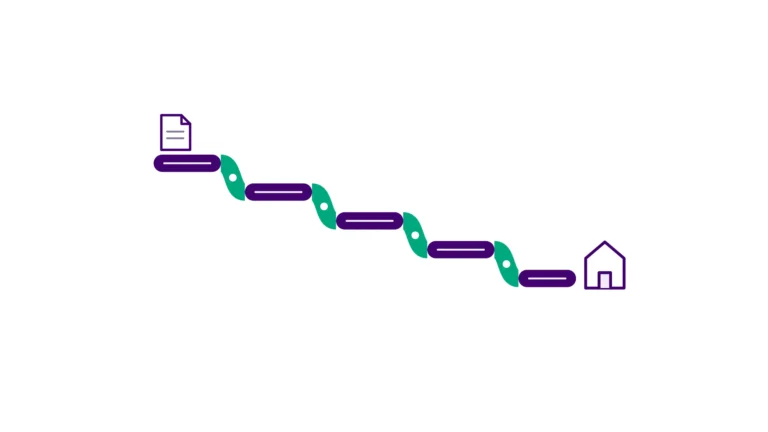
Before a single line of code is written or a single platform is selected, the most effective approach is to document exactly what happens to a claim from intake to closure — every step, every screen, every system, every decision point where a human is acting as a connector between two tools that don’t talk to each other. In most mid-market TPA operations, this exercise reveals a process that looks very different from the idealised flow on the training slides.
A single workers’ comp claim might touch 7 systems in sequence: a FNOL platform, a case management system, an adjudication tool, a medical bill review portal, a correspondence management tool, a compliance tracker, and a reporting dashboard. A single analyst might log in and out of each system 4 or 5 times in processing one claim. Multiply that by 500 claims per analyst per month and you have a rough picture of the human-API problem — staff who spend a significant portion of their working day manually copying data between systems that were never designed to connect.
The 0.5 FTE Gatekeeper Rule
The redesign question isn’t “which system should we buy?” It’s “which manual steps are candidates for automation, and in what order does it make sense to tackle them?” The answer to the second question is almost always determined by a single criterion: which automation saves the most time relative to the cost of building it?
This is the logic behind the 0.5 FTE gatekeeper rule: no automation project goes forward unless it can be shown to save at least half a full-time employee’s time on a sustained basis. It’s a simple filter, but it eliminates the category of vanity projects — dashboards nobody reads, integrations that save 20 minutes a week — and focuses the roadmap on the workflows where the P&L impact is material.
Applying this logic to a typical 300-person TPA operation usually surfaces 4 to 6 automation candidates in the first diagnostic pass. Each one individually is modest. Together, they typically represent the equivalent of 3 to 5 FTEs of capacity returned to the business — without a hiring cycle, without a 90-day ramp, and without adding payroll.
What to Prioritise First: A Starting Framework
If you’re running operations at a mid-market TPA or claims management business and the patterns above feel familiar, the most practical starting point is a workflow audit focused on three questions:
Three Diagnostic Questions
Where is the most data being re-entered manually? In most claims operations, this is the intake-to-case-management handoff and the case-management-to-correspondence step. These are high-frequency, low-complexity tasks that are strong automation candidates.
Where is the most variance in how the same step is performed? Variance indicates undocumented or inconsistently documented processes. These are the places where a workflow redesign — before any technology — will yield the most consistent output.
Where are the longest queue times? Queue backlogs are almost never caused by insufficient analysts. They’re caused by specific workflow steps where the current process creates a bottleneck. Identifying the single most congested step and fixing it first produces a visible, measurable result within weeks rather than months.
These three questions don’t require a technology strategy to answer. They require a half-day workshop with the right people in the room. Which is precisely why the Strategic Diagnostic Workshop is the right starting point — not a software RFP, not a six-month discovery project, not another round of hiring.
Quick Wins from this kind of diagnostic are typically live within 6 weeks. The goal isn’t transformation on a three-year timeline. It’s a measurable reduction in cost per claim, turnaround time, or manual steps per case — before the quarter is out.
For a broader view of how digital transformation strategy applies to operations-heavy service businesses, that framing is worth reading alongside this.
The Real Question for Claims Operations Leaders
There’s a version of this insurance claims processing bottleneck that every TPA and claims management COO has lived through at least once: the moment you realise the headcount model has a ceiling, and that you hit it a few years ago.
The question isn’t whether to fix the operations. It’s whether to fix them before the next volume spike — or during it.
During a claims surge is the worst possible time to redesign a process. Before one, it’s the most natural time to have the conversation. The work is contained. Urgency is manageable. ROI is clear.
What does your cost per claim look like across this year versus three years ago?