
A few months ago the engineering world fell back in love with a job title it had mostly forgotten. OpenAI started talking publicly about its forward-deployed engineers, the people it sends to sit inside its largest enterprise and government customers and get models into production, and Business Insider covered the role in 2025. Anthropic and others followed, and a title that Palantir invented two decades ago became the thing every AI company suddenly needed to hire for. I read the coverage with a particular kind of recognition, because the model everyone keeps describing as new is the one my company has run for years, pointed at operations instead of software.
The debate that arrived with the revival is the part worth paying attention to. Within weeks the think-pieces were asking whether a forward-deployed engineer is really anything more than a consultant with a nicer title, and KDnuggets put that exact question in its headline. It is a fair challenge, and the way the industry answered it is the same way I have thought about delivery since the day we started.
What the title is actually arguing about
Strip the AI framing away and forward-deployed engineering is a claim about where the work happens and who carries the result. The engineer is embedded in the customer’s environment, building in production, instead of taking requirements back to a product team and reappearing months later. The people calling it consulting are not wrong about the danger. It is genuinely easy for this model to slide into an expensive body-shop, where capable people are billed by the hour and nothing they build is owned by anyone once they have gone.
The distinction that survives the scrutiny is accountability. SD Times framed it cleanly: the obligation that separates an embedded engineer from a consultant is that the work has to land and be owned, not merely delivered and invoiced. When the people who designed the change are also the people who deliver it and carry its number, you are buying building. When they present a plan and move to the next account, you are buying advice. The title on the engagement tells you almost nothing about which of the two you are getting.
I have watched the advisory version fail for a decade
I spend my time with mid-market businesses, mostly regulated back-office operations and companies inside private equity portfolios. The pattern I see more than any other is a business that paid for transformation and received a plan. A respected firm arrived, ran the interviews, produced the deck, and left. The slides were genuinely good. Two years later the operation looks almost exactly as it did, except the budget is gone and the team is a little more tired than before. This is the thing I started calling digital transformation fatigue, and it is almost always the residue of advice that nobody stayed to deliver.
The reason it keeps happening is structural, and it is why I think the old consulting model was built for a previous era. The incentives of an advisory engagement end at the recommendation. The hard part, where that recommendation meets a real operation with real people and real exceptions, is exactly the part the advisor is not present for. I have written before about why these six-figure projects fail, and the honest answer is rarely that the strategy was wrong but that nobody owned it long enough to make it real.
The private equity version is starker, because the clock is already running when you buy. A diligence process finds operating upside, prices it, and puts it in the model, and then the advisors who found it leave and the operating team inherits a figure somebody else wrote down. I argue that value creation should begin inside diligence and be carried through delivery by the same people, for the plain reason that an upside nobody owns is an upside that quietly falls out of the EBITDA bridge by year two.
Forward-deployed operations, in plain terms
So here is the frame I would offer, now that the AI world has handed us the vocabulary. What Palantir and OpenAI do for software, which is embed, build in production, and stay accountable, is what a mid-market operation needs for its own manual work. I call it forward-deployed operations, and it is most of the reason Digital Forms exists.
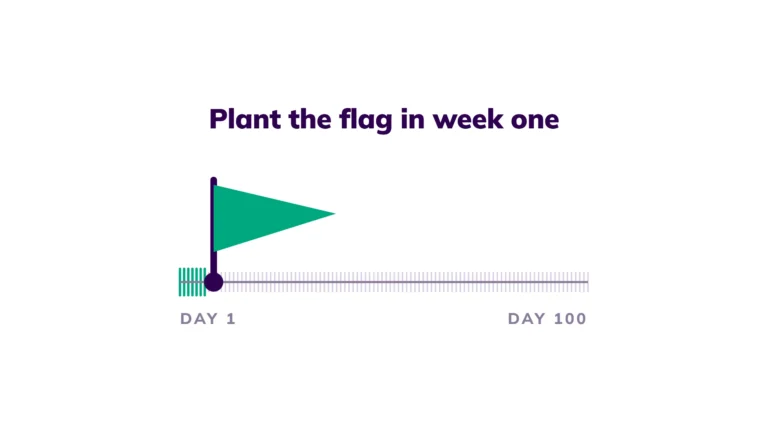
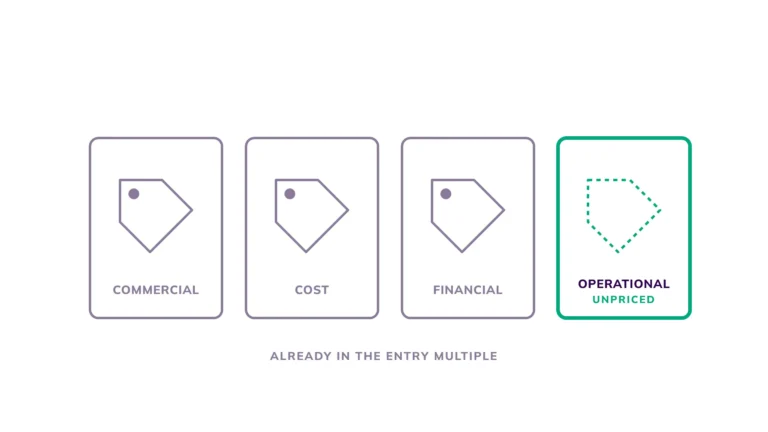
In practice it means a handful of things an advisory firm structurally cannot do. We start by measuring, because you cannot own an outcome you never put a number on. That first pass is what we built the Profit Leak Diagnostic to produce, an honest count of where the handling cost and the delay actually concentrate before anyone proposes a build. From there we sequence by recoverable value, biggest cost first, and we build narrow and in production, which is what an Operations Sprint is: a single high-value workflow automated and running inside weeks, rather than a programme that shows nothing until it shows everything. And when a business needs someone to own the whole operating outcome instead of a single project, that is the seat we fill as an External CDO, the accountable role between the CTO and the business that most mid-market companies have simply never had.
None of it works if the people who design the change are not the people who deliver it. That is the part the forward-deployed label gets right, and the part the mid-market has gone without for years. The staff who have been acting as the Human API between disconnected systems do not need another diagnosis of their situation. They need the connective work lifted off them by someone who is still in the building the first time it breaks.

Why the AI moment makes this more urgent
Every mid-market CEO and every operating partner I speak with is under pressure to do something visible with AI, and the forward-deployed engineers of the world are being flown in to help the largest enterprises do precisely that. The mid-market rarely gets that treatment. A three-hundred-person claims operation, or a portfolio company doing eighty million in revenue, is not getting an embedded team from a frontier lab. What it gets, if it is not careful, is one more advisory engagement that produces an AI strategy and departs before a single workflow has changed.
The operations underneath most of these businesses are not ready for the AI anyone is selling them, because the data a model needs is still being assembled by hand every day. Fixing that is unglamorous, specific, and the kind of work that only pays when somebody stays to finish it. It is forward-deployed work whether or not anyone reaches for the phrase, and it is what we do for regulated operators and private equity portfolios every week, which is most of what our private equity practice is built around.
The part nobody quite says out loud
Here is what I think the “consulting with a better title” crowd is circling without landing on. A forward-deployed engineer at a frontier lab and an advisor at a brand-name firm can do work that looks identical in the room, and at bottom the only durable difference was always who is still accountable when the demo is over, not which team the engineer reports to. That holds just as firmly in a mid-market claims operation as it does inside an OpenAI enterprise deployment. The model is not new, and it was never really about engineering.
So I would hand the question back to the operators reading this. The next time someone offers you a transformation, an AI strategy, or a forward-deployed anything, the useful thing to ask is not what they will recommend. It is who owns the number afterward, and whether they will still be in the room when it is time to go and get it. Who owns your outcome once the deck has been delivered?