
For most of the buyout era, due diligence meant two things: financial diligence to confirm the numbers and legal diligence to confirm the contracts. Everything else was treated as a supporting act. The clearest sign of how much that has changed is that a third party now prices the risk of getting it wrong. Representations-and-warranties insurance, uncommon fifteen years ago, is now standard on mid-market deals, and the underwriters who write it exclude from cover the exact areas a buyer failed to diligence properly. When an insurer will not stand behind the parts of a business you did not examine, the workstreams a deal once treated as optional stop being optional, and the return that used to come from cheap debt and rising multiples increasingly has to be built inside the business instead.
What are the types of due diligence in private equity?
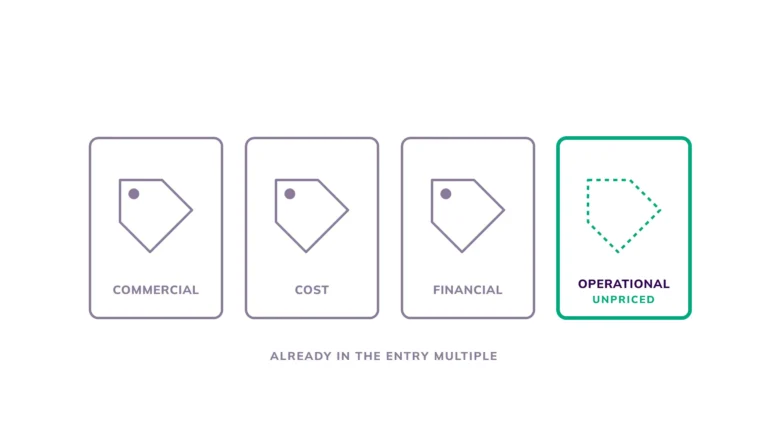
A modern buyout runs several diligence workstreams in parallel, and it helps to name them, because “due diligence” gets used as one word for what are really distinct reviews with different owners and different questions. Financial diligence confirms the quality of earnings and the working-capital picture. Legal diligence confirms the contracts, the liabilities, and the corporate housekeeping. Commercial diligence tests the market, the competitive position, and the revenue thesis. Operational diligence reads the people, the processes, and the capacity to deliver the plan. Technology diligence reads the systems, the security posture, and the technical debt.
The first two are old and non-negotiable, and no deal closes without them. The last three are comparatively recent additions to the standard stack, and they are the ones whose depth varies most from deal to deal. A buyer can run a thorough financial and legal process and treat commercial, operational, and technology diligence as a light read, a box ticked with a summary memo. That is where the underpricing starts, because the workstream a deal skimps on is usually the one carrying the value the model never captured.
Two different things get called private equity due diligence
Before going further it is worth separating two uses of the phrase that point in opposite directions, because the confusion between them wastes real effort. One is deal-side: a buyer or investor diligencing a target company before an acquisition, which is the subject of this piece. The other is fund-side: a limited partner diligencing a fund manager before committing capital, assessing the firm’s operations and controls against its track record. That second discipline is often called operational due diligence too, and it is a legitimate function, but it is about vetting a manager rather than improving a business.
The distinction matters because the two have almost nothing in common in practice. Fund-side diligence is a counterparty-risk exercise run by an LP’s investment team. Deal-side diligence is an operating exercise run by a deal team and its advisors to decide what a target is worth and what it will take to improve it. When a deal partner talks about the diligence that decides a buyout, they mean the second, and the rest of this article stays there.
What does the private equity due diligence process look like?
The diligence process runs in phases, and where the operating read sits in that sequence largely determines how useful it turns out to be. Early on, before a binding offer, a buyer runs a lighter screen to decide whether a target is worth real diligence spend at all, often working from limited information. Once a deal is live and exclusivity is granted, confirmatory diligence goes deep across the workstreams in parallel, and this is the window in which the findings that move price and structure have to land. After signing, the diligence outputs are meant to become the first hundred days of the value-creation plan, the risk register turning into a backlog and the upside model into a roadmap.
The operating and technology read can enter at any of these phases, and the earlier it does, the more it is worth. A fund that forms an operating thesis during confirmatory diligence buys the same asset with a plan already attached and a number it helped build. A fund that leaves the operating read until the hold has begun pays for the same findings twice, once as a surprise at the target and again as the lost time it takes to rebuild a thesis nobody wrote down.
Why technology and operational diligence get underpriced
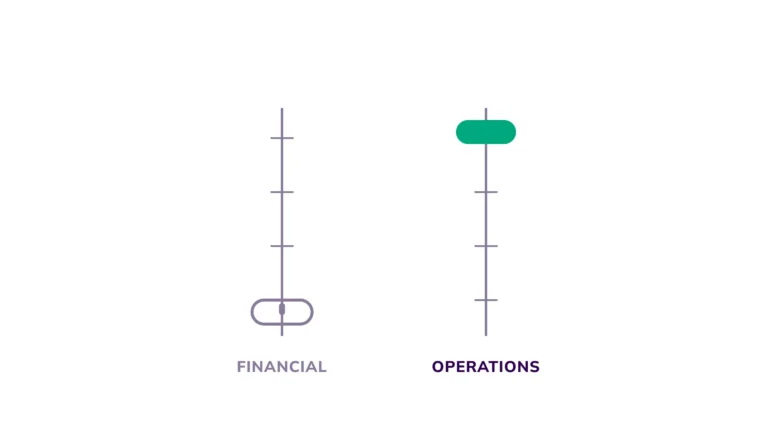
The reason the operating workstreams get the lightest treatment is not carelessness, it is difficulty. A financial finding is easy to write down as a number, and a legal finding is easy to flag as a liability, while the cost of a business running on manual work spread across disconnected systems is genuinely hard to quantify in the few weeks a diligence window allows. So it gets described in words rather than dollars, then filed as a qualitative risk and left out of the price.
The pressure of a competitive process makes this worse, and the environment has raised the stakes. Exits have slowed and holds have lengthened over the last few years, on PitchBook’s deal data, so operational drag left unpriced at entry has more time to compound against the fund before it can sell. In an auction the diligence window is also compressed, sometimes to a few weeks, and the workstreams that are hardest to quantify are the first to be thinned when time is short. So the operating read, the one that needs the most time to turn hours of manual work into a defensible figure, tends to get the least of it, precisely on the deals where the operating upside is largest and the price is most contested. At Digital Forms we call the pattern that hides there the Manual Wall: the growth ceiling a company hits when it has been absorbing volume by adding headcount because the systems underneath were never built to carry it.
In a target this shows up as an operation that looks healthy on the financials and expensive underneath. Revenue is growing, headcount is growing with it, and the two lines rising together read as a scaling business, while a large share of that headcount exists to move data between systems by hand. A standard operational read records the team as capable and the processes as functional, both of which are true, and never counts the hours going into work that a connected system would remove. The technology estate, meanwhile, gets read as a risk column, something to be checked for security exposure and licensing rather than assessed as the place the operating upside is buried. That specific miss, where the technology read and the operational read pass each other without meeting, is the one we go deep on in our piece on the blind spot in operational due diligence.
What a technology-aware diligence actually produces
A diligence worth the name on the operating side does not come back as a memo that says the systems are dated and the team is stretched. It produces three things a deal team can actually use at the table. The first is an operational risk register that tags each finding by how it should affect the deal, whether it is a price chip, a representation-and-warranty issue, or a genuine red flag. The second is a conservative, confidence-rated model of the EBITDA upside that recovering the manual work would release, expressed as a number a buyer can underwrite rather than a promise. The third is a sequenced first-quarter plan that says which operating moves come first and why, so the value-creation work has a starting line the day the deal closes.
That is the same discipline our private equity engagements are built around, and it is why we treat the technology estate as an operating-upside question rather than a risk column. When the upside is modelled at diligence rather than discovered after close, it feeds the price and the deal structure directly instead of arriving as a surprise the operating team inherits.
Why diligence should be connected to delivery
It is a well-worn finding, documented for years in Harvard Business Review and in academic studies of M&A, that most acquisitions fail to deliver the value the buyer underwrote, and the distance between diligence and delivery is one of the reasons why. The weakness in the conventional arrangement is not only that the operating workstreams are thin, it is that they are disconnected from whoever has to deliver the plan. The technology and operational read comes back from advisors who move on at close, the findings get filed, and the value-creation plan gets written by people who were not in the room when the diligence happened. The operating team then inherits a thesis it did not build and a set of findings it has to reconstruct, which is a slow and lossy way to start a hold.
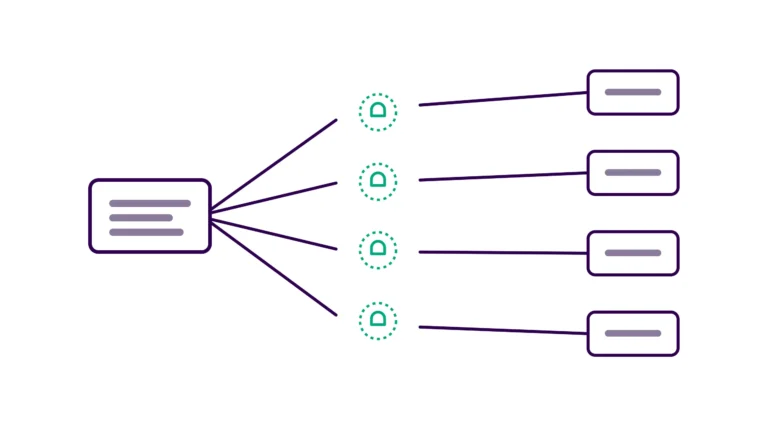
The alternative is to treat diligence as the first phase of value creation rather than a gate before it. When the same team that scores the operating risk pre-deal also models the upside and stays to deliver it, the plan has a technology chapter from day one, and the number in the model is one the fund actually helped build. This is why we argue that value creation in private equity should begin in diligence, and it is the logic behind the operational lever most operating partners underuse: the upside is far cheaper to capture when it was quantified before the deal than when it is discovered a year into the hold.
What this looks like without a named logo
Picture a mid-market services business in a competitive auction, growing revenue at a healthy clip, with clean financials and no legal skeletons. The financial and legal diligence come back thorough and reassuring, and the operational read notes a capable team and a few dated systems. What the operational read does not put a number on is that a large share of the workforce spends its days on repetitive, rules-based work moving information between systems that were never connected, and that the company has been meeting rising volume by hiring rather than automating.
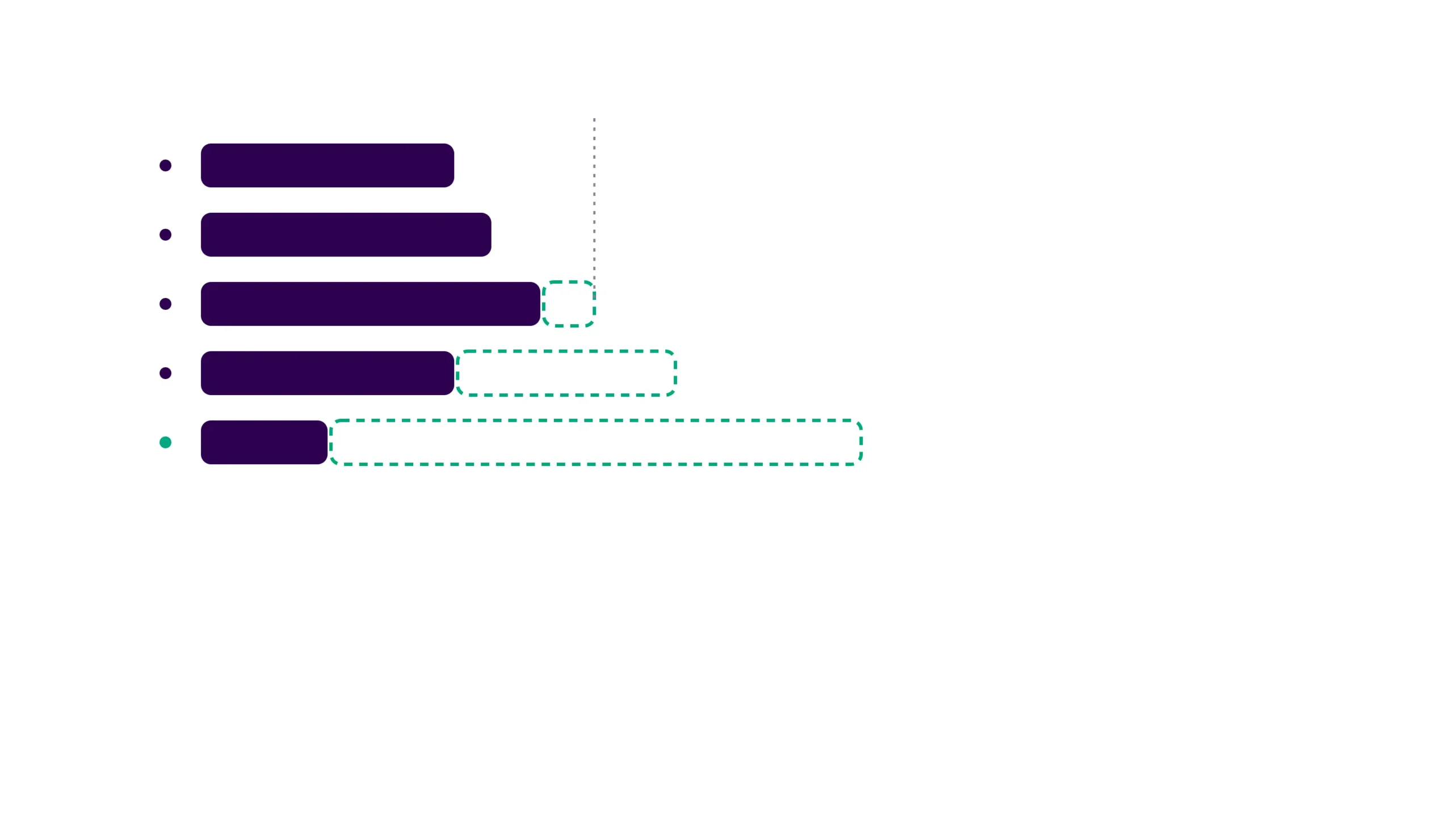
The buyer prices the deal on the financials, wins the auction, and spends the first year of the hold discovering the operating drag the diligence described in words. Had someone counted the hours going into that repetitive work and priced what recovering them was worth, the figure would have been large enough to change the model, and in operations of this scale it routinely is. The upside was always there in the target. It was simply never on the diligence that set the price.
What a deal team can do about it
The practical move is narrow and changes little about the process. When commissioning diligence, make the operating workstreams a value question rather than a risk box: require that the technology estate be assessed for operating upside, not only security and licensing, and that the manual work inside the core workflows be counted and priced. That single instruction pulls the underpriced workstream into someone’s remit and converts a vague sense that the business is people-heavy into a number that belongs in the model.
The second move is about continuity. A diligence that quantifies the upside is worth far more when the people who scoped it are the people who deliver it, because the operating thesis does not have to be rebuilt from a filed report. On an asset already owned, the same read is what we built our Profit Leak Diagnostic to produce, because operators consistently underestimate how much margin is trapped in processes they have stopped noticing. On a live deal, that read is a legitimate input to what the asset is worth.
The workstream that decides more than it is given credit for
Financial and legal diligence tell a buyer whether a deal is safe to do. They rarely tell the buyer how much of the target’s apparent health is people compensating for systems that were never built, and that figure is now large enough, and the return math tight enough, that leaving it uncounted is a pricing decision whether the deal team means it to be or not. The next time a diligence process comes back clean, the question worth asking is not whether the numbers hold. It is how much the business is paying, in payroll, for the work a system should be doing, and whether that number made it into the price.