
The AI platform went live in November. By March, the operations team headcount was unchanged from October, and the throughput target that had justified the six-figure deployment cost hadn’t shifted. The tool was working — processing standard cases, routing to the right queues, pulling the correct fields. What it had never been shown was what happens when a case doesn’t follow the standard path. In that particular claims operation, roughly four in ten cases don’t.
McKinsey’s 2024 State of AI survey found that while AI adoption had accelerated substantially across business functions, the proportion of organisations reporting measurable cost-base impact from AI deployments remained a minority — a finding consistent across multiple survey cycles and not improving proportionally with the rise in adoption activity. In mid-market service operations, that gap has a specific and addressable cause: AI tools are being deployed on workflows that were never fully mapped before deployment began. The tool works. The scope was wrong.
Call this the pre-map problem. A workflow cannot be automated beyond what has been documented, and in most service operations at this scale, the portions of a workflow most resistant to automation are exactly the portions that have never been written down — because they were always handled informally by whoever happened to know the exceptions.
What gets automated when a workflow isn’t fully mapped
When a workflow enters an AI deployment process without full documentation, the tool is built against the version of the process that was described to it — a combination of SOP documents, sample case files, and walkthroughs with whichever staff members were available during the discovery phase. That version has a structural property: it describes the cases that are easy to describe, because they’re the cases that follow the rules.
In most mid-market service workflows, the regular path covers a large share of total case volume — claims that arrive correctly formatted and prior authorisations that match the expected template. That path is well-understood, genuinely amenable to automation, and produces measurable throughput improvements once the technical build is complete.
The exception path is a different matter. In healthcare claims, insurance back-office, and specialist staffing operations, exception cases represent a substantial fraction of total volume — substantial enough to determine whether overall throughput moves in line with the deployment’s business case, or merely reflects an improvement on the easier half of the work. Before the AI was deployed, those cases were handled by people who had learned, over time, which incoming signals meant trouble and what to do when a case didn’t conform to the template. After deployment, they’re still handled by those same people in exactly the same way, because nothing about what they work from has changed. The tool performed accurately against its documented scope. The exception path was never in scope.
Why the exceptions live in a person, not a document
Exception-handling knowledge in a mid-market service operation doesn’t sit in a shared folder. It accumulates in specific people — two or three individuals on any operations team who have been in their roles long enough to have encountered the full range of things that can go wrong, and through that experience have built a working model of what to do in each situation.
These people are easy to find in any team: they’re the ones everyone else asks. When a claim comes in with a provider taxonomy mismatch, when a prior authorisation record is attached to a discharged patient, when a reconciliation entry hits a format the system doesn’t recognise — the routing, informally and reliably, goes to the person who knows what that situation means. That routing appears in no process document. It functions because the person’s accumulated case experience makes it reliable, and the operation has built a quiet dependency on that reliability being present.
In the Digital Forms model, we use the term Human API to describe staff members who bridge operational gaps by doing manually what software should be doing automatically. The version of this problem that gets discussed most often involves data transport: staff who open system A, copy a value, enter it into system B, because no integration carries it automatically. That type of Human API is visible once you look for it. The data movement is a repeatable, describable activity that can be mapped and then designed out.
The exception-handler is a different Human API variant — one carrying process knowledge rather than data. The gap they bridge runs between the formal process documentation and the operational reality of how work actually gets done — a different kind of gap from the one that integration work between two software platforms would close. That gap can’t be closed by connecting two systems or layering automation on top of what currently exists. It requires making the tacit knowledge explicit first: documenting what the exception-handler actually does, which case types trigger which responses, where judgment is genuinely needed, and where the formal process ends and informal compensating behaviour begins.
The distinction between these two variants matters practically because the fixes look different. Data-transport Human APIs can often be addressed through integration work — building the connection between two platforms — without needing to change the underlying operational process at all. The process-knowledge Human API requires something harder first: extracting the knowledge from the person who holds it, validating it against actual case behaviour, and formalising it into rules a tool can act on. That formalisation step is the pre-mapping work. It can’t be run concurrently with the deployment or delegated to a vendor. It has to precede the deployment brief entirely, or the tool will be scoped against an incomplete picture of the workflow and perform accordingly.
Why the mapping step consistently gets skipped
In mid-market service companies between 200 and 1,000 employees, the absence of pre-mapping reflects a structural gap — no one in the org chart owns the step. Most companies at this revenue level have a technical function whose remit covers keeping systems stable and evaluating technology options against technical criteria. When an AI mandate arrives, that function does what it is equipped to do: evaluates vendors, shortlists options whose demos perform well on documented process steps, and runs a proof of concept against available sample data. The question “which workflows need to be fully mapped before this tool can be deployed” sits outside that remit. It’s an operational design question, one that requires starting from the business’s cost structure rather than the technology architecture.
The function that performs that work is a CDO — someone whose first deliverable on any technology initiative is a complete map of the target operational workflow, including edge cases and exception-handling, expressed in FTE terms before vendor selection begins. In the mid-market, that function is typically absent. The CDO gap — the structural absence of the person whose mandate is operational design first, technology second — means the pre-mapping step has no owner. Steps without owners get deferred to after deployment or skipped entirely.
The result is consistent: tools are selected and deployed against documented workflow performance, and the exception-handling workload persists because it was never in scope to begin with — accumulating into the Manual Wall the business was hoping the AI deployment would help dismantle. For the fuller picture of how unmapped manual work accumulates cost as a business scales — and why that cost compounds with each new hire — the operational structure is the same whether the tool is AI or conventional automation.
What the 0.5 FTE rule actually forces
The 0.5 FTE gatekeeper rule — the threshold Digital Forms applies before any AI or automation initiative receives a budget commitment — functions as an indirect pre-mapping mechanism. The rule requires demonstrating, before vendor selection, that an initiative will free at least half a full-time employee’s time in a specific named workflow. Getting that calculation right forces the mapping step to happen.
To determine that a workflow consumes 0.5 FTE, you need to know who performs each step, how long each step takes, how often it occurs, and how frequently exceptions arise along with how long each type takes to resolve. That last element is almost never captured in existing documentation. In a mid-market claims operation, regular-path cases might take eight minutes. Exception cases — those requiring a secondary system check or a provider call outside the standard process — might take thirty-five. Without mapping the exception-handling, the FTE calculation undercounts significantly and the initiative appears more tractable than the operational reality warrants.
Teams that treat the FTE calculation as a genuine accounting exercise — rather than a formality to satisfy before the contract moves forward — surface a different set of questions from the ones a vendor demo answers. Which case types are exceptions? Who handles them? What are they doing, specifically, when they do? Where does the standard process end and the informal compensating behaviour begin? Those are the mapping questions. They require no technology to answer — only access to the right people and the mandate to ask before committing budget.
What mapped-first deployment looks like
In US healthcare claims and back-office operations, the No Surprises Act — which came into force in January 2022 — compressed technology deployment timelines significantly. Operations that had been running on legacy manual processes found themselves under pressure to demonstrate new compliance capabilities quickly. Tools were deployed on timelines that left limited room for pre-deployment diagnostic work. In many cases, the exception-handling for the compliance-sensitive claims — the exact cases the regulation created new complexity around — remained manual after deployment, because those cases were the ones that hadn’t made it into the documentation the deployment team was working from.
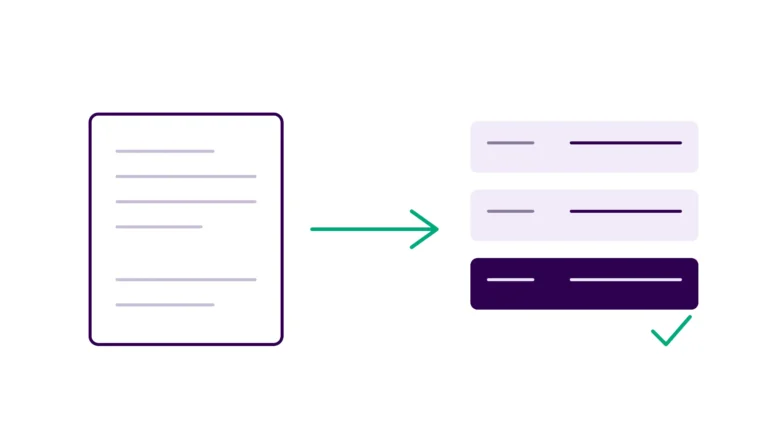
When mapping precedes deployment, the process surfaces a more accurate scope. Consider a mid-market insurance back-office processing several thousand claims monthly. Structured pre-deployment mapping typically produces two distinct workflow structures where the organisation had assumed it had one. The first is the regular-path workflow — well-understood by the team, partially captured in existing documentation, and amenable to automation once the integration work is complete. The second surfaces when the mapping team asks, for each step in the regular path, what happens when a case input doesn’t conform to the expected format.
The answers tend to be specific and concentrated. One handler knows that filings from a particular provider taxonomy require a secondary review before the reserve is set. Another knows which payer formats require cross-referencing against a separate system. Their knowledge appears nowhere in any SOP, and in aggregate it accounts for a meaningful fraction of the team’s most experienced staff’s working hours — hours that appear on reports as salaries but represent time spent compensating for a scope gap the AI deployment was supposed to close.
When AI is deployed after this mapping work, the scope is different and the result is different. The regular-path automation proceeds as before. The exception-handling becomes a designed input rather than an undocumented residual: routing logic that reflects actual triage behaviour, escalation paths that match the real decision tree. The digital transformation strategy produces the operational leverage the business bought it to produce, because the full workflow was in scope.
Where to start
The practical sequence for operations teams considering AI deployment begins with the mapping exercise. Structured workflow documentation — covering every step in the formal process and every exception type, including the informal knowledge held by the most experienced members of the team — produces two things in parallel: a complete scope for the AI deployment and a defensible FTE calculation for the initiative.
That exercise requires no technology. It requires operational access and the discipline to document what experienced staff actually do, including the workarounds and exception-handling that never made it into any SOP. The output is a process map accurate enough that any tool can be evaluated against it honestly — including the exception cases that will ultimately determine whether the deployment changes operational cost or simply accelerates the portion of the workflow that was already manageable.
The Profit Leak Diagnostic Digital Forms runs as an engagement entry point covers exactly this ground — workflow by workflow, exception type by exception type — with scope definitions that reflect operational reality before any vendor is contacted. The output feeds directly into Quick Wins: first deployment cycles with defined scope, measurable targets, and no residual manual layer left intact because it was left out of the brief.
The pre-map problem doesn’t announce itself as a process failure. It announces itself as an AI tool performing correctly on a portion of the workflow while headcount stays flat, and the throughput figure in the board pack doesn’t change. The instinct in that situation is to examine the tool. The more diagnostic question is: what did we hand it, and was it the whole process?