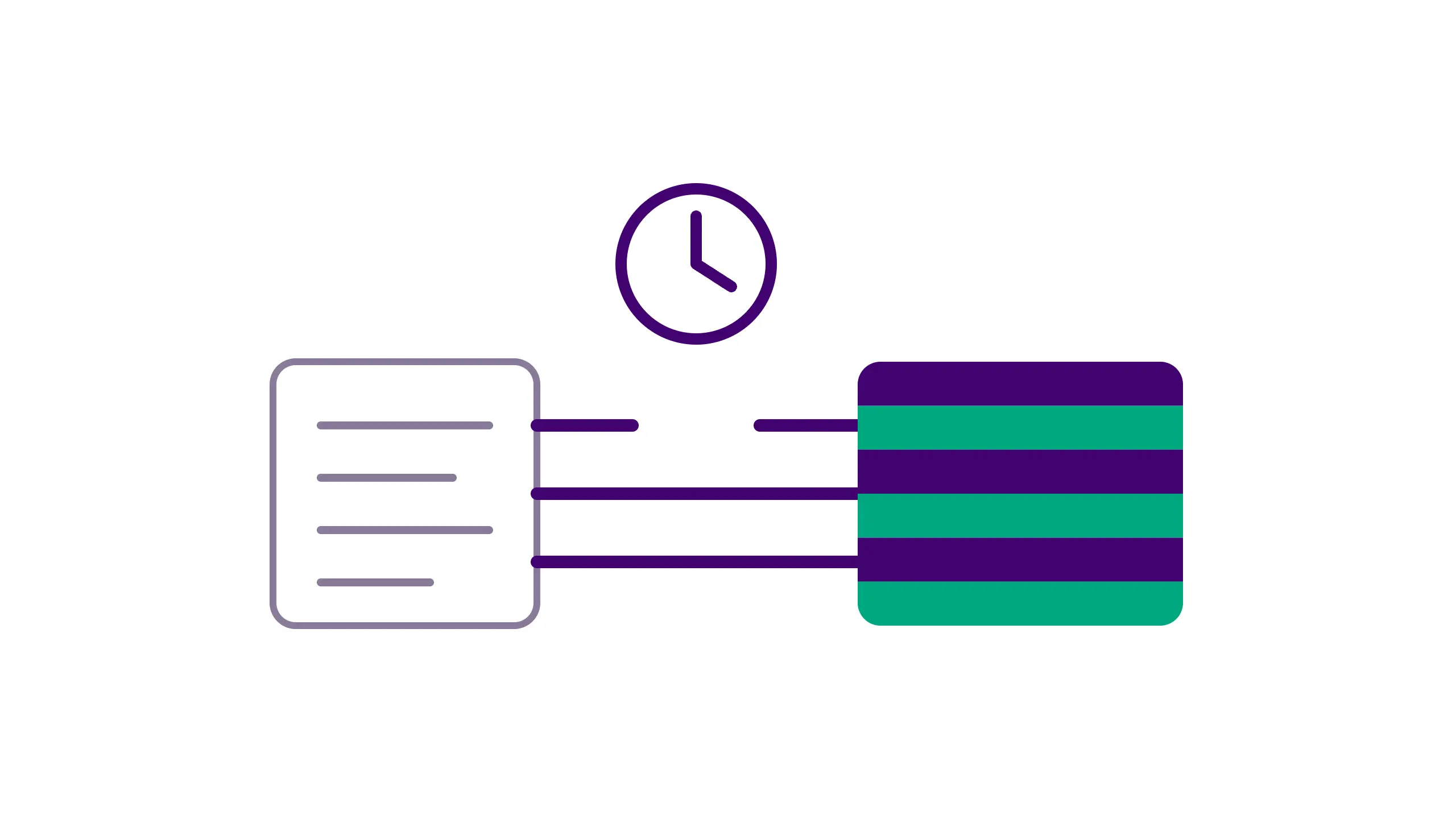

The day a carve-out closes is not the day the business can run on its own. Between those two dates sits a Transition Service Agreement, and that agreement has an expiry date written into it at signing. A 2026 benchmark of 39 SEC-filed separations from 2020 to 2026, compiled by BD Emerson, found the median TSA ran 24 months, with stated terms spread from 8 to 25 months. That is the window. When it closes, the carved-out business either runs its own finance, IT, and back office, or it has a problem that is now contractual rather than theoretical.
Operating partners tend to treat that window as a migration schedule. Stand up a new system, re-point the integrations, cut over before the clock runs out. The schedule is real, but it describes the wrong work: the expensive part of a carve-out is rarely the software that moves, it is the manual work the parent’s shared-service teams were quietly absorbing, work that becomes the standalone entity’s responsibility on the exact date the TSA ends.
The Manual Wall arrives on a date you already signed
For the length of the TSA, the carved-out company is still leaning on the parent. Payroll gets run by a team the new entity does not employ. Vendor invoices get matched against purchase orders by people in a shared-service centre two time zones away. Month-end close happens on an instance of an ERP that belongs to the seller. None of this is visible on the deal model, because the deal model priced the services, not the labour behind them.
This is where the Manual Wall shows up in a carve-out, and it shows up with a deadline. The Manual Wall is the point at which a business keeps functioning only because people are compensating by hand for work that was never designed to run without them. In a steady-state company, the wall builds slowly as volume grows. In a carve-out, it is installed on day one of independence, because the parent’s teams walk away and the standalone entity has to reproduce what they were doing. The manual work almost always exists at this scale, so what decides the outcome is whether anyone has counted it before the TSA that hides it expires.
Underneath that sits a quieter gap. The deal team owns the transaction. The IT programme owns the system cutover. Nobody, in most carve-outs, owns the operating model the business will actually run on once it is alone. That missing role is the CDO gap, and a carve-out is where it costs the most, because the operating model is being built from scratch against a fixed clock rather than inherited and improved.
Why this is an operating-model problem, not a migration
Deloitte’s 2026 Global Divestiture Survey puts the pattern plainly: organisations underestimate post-close value erosion, and it names stranded costs, TSA complexity, and legal-entity and operational redesign as the drivers of that lost value. The same survey reports that seller performance is improving, with roughly one-third of sellers meeting expectations on timing and proceeds in 2024 and nearly half doing so by the end of 2025. Sellers are getting better at the transaction. The erosion Deloitte describes happens after the transaction, on the operating side, which is the buyer’s problem to solve.
The reason a migration framing understates the work is simple to state and easy to miss. Moving a system does not move the process that ran on it. When finance cuts over to its own ERP, the invoices still have to be coded and the exceptions chased before any reconciliation can be done. Under the parent, a shared-service team did those steps and the carve-out never saw them. After the cutover, those steps land on whoever the standalone business has hired, and if the business budgeted for a system rather than for the work, it covers the gap the only way it can at short notice, which is with headcount and overtime.
That is the shape of the erosion, which comes not from a failed migration but from a successful one that exposed how much human effort the parent had been contributing for free under the service agreement. A carve-out that lifts and shifts the parent’s tooling without redesigning the process inherits the parent’s manual steps at a smaller scale, which is usually a worse ratio, because the fixed cost of the manual work is now spread over a smaller business.
See where TSA exit will actually cost you.
Our private equity work starts by mapping the manual work a carve-out inherits when the service agreement ends, in hours and recurring cost, so the separation is sequenced against the real exposure rather than the migration calendar.
What the TSA is quietly hiding
The useful way to read a TSA is as a list of everything the business cannot yet do for itself. Each service line on that agreement is a capability the parent is renting to the carve-out, and each one has manual work attached that the invoice does not itemise. A payroll service line is more than a system, it is also the people who handle the exceptions and the off-cycle pay runs, and when the line ends the standalone business needs its own version of all of that running cleanly. Without a deliberate plan, that gap gets bridged the way the Manual Wall always gets bridged, with standalone staff carrying data by hand between the new system and the processes the parent used to run, which is the Human API problem landing in a business that is only weeks old.
The due-diligence read is supposed to flag this, and often it does not go deep enough. A conventional operational read treats systems as one checklist entry among many and notes carve-out complexity in a sentence. We have written before about what operational due diligence misses when it treats the technology estate as a liability to be insured against rather than an operating model to be understood. In a carve-out the stakes are higher, because the diligence question is not only whether the systems are sound but whether the business can reproduce, on its own, the labour the parent was supplying. That is a different and harder read, and it belongs in the technology due diligence workstream before the deal closes, not after the TSA clock has started.
Here is the part that catches operators out. The TSA fee is predictable and the exit cost is not. While the service agreement runs, the cost of the parent’s manual work shows up as a tidy monthly line. The moment the line ends, that cost reappears inside the standalone business as new hiring and temporary staff, plus the error rate of a team doing unfamiliar work for the first time. The budget swapped a known fee for an unknown operating cost, and the unknown is almost always larger than the fee it replaced.
In what order should you sequence the separation?
The instinct is to separate in the order the systems allow, starting with whatever is easiest to cut over. That order optimises for the migration programme and ignores the economics. A better order starts from the recoverable cost and the risk at the point each service line ends.
This is where we apply ROI-ordered sequencing to a carve-out at Digital Forms: rank the separation workstreams by the manual cost and operational risk that lands when each TSA line expires, and take the biggest and riskiest first. A payroll line that, on exit, would require a team to run complex multi-jurisdiction pay by hand is a different priority from a reporting line that one analyst can cover with a spreadsheet for a quarter. Sequencing by system-readiness treats those two as similar because they are similar technically. Sequencing by exit cost treats them as very different, which is what they are on the P&L.
Sequencing this way has a second benefit under a fixed clock. It front-loads the workstreams where automation changes the headcount maths most, so the standalone business is designed to run leaner rather than designed to replicate the parent at a smaller scale. A carve-out gets one clean chance to build its operating model deliberately, in the months between close and TSA exit, and the order in which it spends that time decides whether it comes out of the agreement with a lean operation or a set of manual processes it will be unwinding for years. The portfolio-operations lever most operating partners already track, which we have covered as the operational EBITDA lever, is unusually accessible here precisely because the operating model is being built new.
What good separation looks like with months left on the clock
A standalone business that handles its TSA exit well tends to look the same from the inside. A mid-market carve-out’s TSA often carries a dozen or more service lines, and the business that exits cleanly has a costed answer for each one: it knows, line by line, what manual work the agreement is covering, and it has that written down in hours and recurring cost rather than in migration status. Its separation plan is ordered by what the exit of each line will cost, not by what the IT programme finds convenient to cut over first. It has chosen, deliberately, which processes to automate before independence and which to staff for a defined bridge period, and it can say why for each one.
What that business avoids is the common ending, where the systems are separated on schedule and the TSA expires on schedule, yet the first standalone month-end runs far longer than planned, in the carve-outs we see often by a wide margin, because the manual steps the parent used to absorb were never counted. The work was always there. It was just inside someone else’s cost centre, and the separation plan never brought it into view. Bringing it into view is unglamorous, and it is the single thing that most reliably protects the operating case the deal was underwritten on.
None of this requires a two-year platform programme. It requires knowing the number before the clock forces the answer, and starting with the workstream where that number is largest.
What to do about it
If a carve-out is on the near horizon or already in its TSA period, the first move is a measurement rather than a system decision. Read the TSA as an inventory of unbuilt capability, and put a real figure, in hours and annual cost, against the manual work hiding behind each service line. Surfacing exactly that ranked figure is what we built our Profit Leak Diagnostic to do, and in a carve-out it doubles as a separation plan, because the ranking of recoverable cost is also the order in which the workstreams should be tackled.
From there, the work is about getting one real capability standing before the clock makes the decision for you. Rather than scoping a full transformation, we keep the first move tight: an Operations Sprint that puts one standalone process live and automated inside a fixed window, usually the workstream the diagnostic ranked first. That proves the operating model on the capability that matters most and buys evidence for how to handle the rest, while there is still time on the agreement to act on it. The 100-day plan most sponsors run should carry this as a named workstream, and we have written about the value creation plan that survives contact with the business rather than the one that looks tidy in the data room.
The TSA gave you a deadline and a grace period in the same clause. The grace period is for building an operation that does not need the parent. Spent well, it is the cheapest time a carve-out will ever have to get its operating model right. Spent as a migration schedule, it ends with a business that is technically separate and operationally still improvising, paying for the gap in overtime and rework long after the agreement that hid it has expired.