
Something happens to the P&L of a growing service company that has no clean explanation. Revenue climbs — 20% last year, similar forecast for this year. The pipeline is healthy, the team is performing. But the margins are narrower than they were three years ago, and a business doing £80 million has an EBITDA margin two points lower than it had at £40 million. The board is asking why.
The answer is almost never the market, the pricing, or the sales team’s close rate. In mid-market service companies between 200 and 1,000 employees, the explanation almost always traces back to the same structural pattern: the Manual Wall. The operational model was built for a company half its current size. It has been scaling through headcount — adding people to process forms, cases, claims, or compliance workflows rather than automating the processes underneath. Growth has continued, but so has cost, at roughly the same rate, with the result that the margin advantage that was supposed to come with scale has never arrived.
What the Manual Wall actually is — and what it isn’t
The Manual Wall is a structural pattern, not a technology problem, a management failure, or a symptom of unusually poor processes. It emerges when service companies scale past around 200 employees without redesigning how operational work gets done, and it presents with remarkable consistency across sectors where operations are screen-based and volume is high.
Here is the mechanism. In the early years of a service business, growth is managed by adding people. A team of 30 can be run on judgment, relationships, and the CEO’s personal visibility into every corner of the operation. Manual processes are cheap workarounds — a spreadsheet here, a copy-paste routine there — because the volume they handle doesn’t justify building something better. The operational model works at this scale precisely because it’s informal and light.
But as the business grows toward 200 employees and beyond, the volume of work being pushed through those informal, manual processes reaches a point where it can no longer scale without cost. To do twice the work, the business needs roughly twice the people. To do three times the work, it needs three times the people. Throughput becomes directly proportional to headcount — and that proportionality is what makes the wall structural rather than incidental.
This is a structural diagnosis, not a personal one. CEOs who hit the Manual Wall are not managing their businesses badly. They are managing businesses that were built to scale through headcount, and they are now at the scale where that approach stops generating improvement in margins. Understanding this distinction is the precondition for fixing the problem, because the solutions available to a capacity problem and the solutions available to a structural design problem are completely different. Hiring more people is the correct response to a capacity constraint, but applied to a structural design problem it makes the eventual fix progressively more expensive — because every hire that absorbs a manual workflow raises the change-management cost of eventually removing it.
The hidden financial cost of manual processes and how to calculate what they are consuming in your P&L is covered in detail in a separate piece. This article is upstream of that work — it addresses why the pattern exists and how it changes shape as a business grows, which determines what kind of intervention is actually needed.
Why the Manual Wall appears specifically between 200 and 1,000 employees
The 200 to 1,000 employee band is not an arbitrary observation. It is the specific range where the economics of manual-first growth become visible and painful — and where, critically, they do not automatically force a resolution.
Below around 200 employees, the CEO and a small management team can still compensate for operational inefficiency through direct involvement. The business is small enough that a senior person can identify and fix recurring problems before they become systemic. The manual processes exist, but their cost is manageable and the CEO’s personal bandwidth can absorb the gaps, even if doing so is increasingly tiring.
Above around 1,000 employees, the opposite tends to happen. The pain becomes severe enough that the business has usually been forced to build systems infrastructure — not necessarily good infrastructure, but something. Companies at this size have typically survived a serious technology failure, a near-miss on a regulatory compliance issue, or a board intervention that forced a structural response. The wall became too expensive to leave standing.
The middle band is the structural trap because neither forcing mechanism applies. The business is large enough that manual-first scaling has created real cost, but not so large that the cost has become existential. CEOs in this range are managing growth and dealing with operational friction simultaneously, and the friction is chronic rather than acute. There is always a reason to prioritise the next revenue opportunity over stopping to redesign the operational model. This is the zone where the Manual Wall embeds itself most deeply, where every individual decision that built it seemed reasonable at the time and where the cumulative pattern is genuinely difficult to see from the inside.
How the Manual Wall changes shape across the growth band
The Manual Wall does not present the same way at every point in the band. It shifts in character and cost as the business grows, and understanding which phase a company is in matters both for diagnosis and for setting realistic expectations about what intervention looks like.
At around 200–300 employees, the wall is first experienced as a capacity constraint. Operations are perpetually slightly overwhelmed. There is always a queue of work, always a team that needs two or three more people to keep up with volume. The instinctive response is to hire — and it appears to work. The queue shortens for a few months. Then volume grows, the queue builds again, and the pressure returns. This cycle repeats, often for several years. At this stage the CEO is not yet seeing a clear P&L signal; margins are still acceptable even if slightly compressed from their earlier peak, and the pattern is almost universally misdiagnosed as a staffing shortage.
What is actually happening is that the operational model has reached its leverage limit. Headcount can be added indefinitely, and throughput will grow with it — but so will costs, at roughly the same rate. The margin that looked fine at 150 employees starts to compress because revenue per employee is no longer improving, and each new hire brings overhead: management time, onboarding, benefits, workspace. Growth is happening, but the P&L is quietly telling a different story about where the returns on that growth are going.
At around 400–600 employees, the pattern becomes visible as a financial problem rather than an operational one. By this point, the business has added perhaps 200–250 people since the first signs of capacity strain. Revenue has grown substantially, but EBITDA has not grown with it. Revenue per employee is flat or declining year-on-year. The cost base has grown roughly in line with revenue. A business that should be achieving margin expansion at its current revenue level has margin compression instead.
This is also the phase where the Human API problem becomes measurable, if anyone stops to look for it. The company’s core workflows now run across five, eight, sometimes more disconnected software platforms. Staff have become the integration layer between those platforms — manually carrying data from one system to the next, re-entering information that already exists somewhere else, assembling reports by hand from sources that were never designed to communicate with each other. A meaningful portion of the operational headcount added over the previous three years is not doing the underlying business work; it is doing the data-transport work that software should be handling automatically.
The mechanism that drives this is explored in detail in the cluster post on scaling operations without adding staff. The key point worth naming here: each new system added to the technology stack without being integrated into existing workflows creates new bridging work. The stack grows; the headcount required to operate it grows proportionally. By the time a service company reaches 500 employees in this pattern, most have a deeply fragmented technology architecture — not because anyone made bad individual decisions, but because nobody had the mandate to ask whether the architecture as a whole was generating leverage.
At around 700–1,000 employees, the Manual Wall is a board-level problem. EBITDA per employee is measurably below where it should be for a company at this revenue level. Investors or pre-transaction advisors doing due diligence can see that the operational model does not scale cleanly. The CEO can no longer manage the operational complexity personally — the business has grown beyond what can be run on judgment and direct relationships.
This is also the phase where the CDO gap becomes acute. Most companies at this scale have a CTO, or at minimum an IT director. That person’s role is to maintain infrastructure, manage vendor relationships, and implement new tools when the business requests them. But there is a different question — whether the operational architecture is generating leverage, which workflows should exist and which shouldn’t, where the business is paying people to do work that systems should be doing — and the CTO does not own that question. The CEO is running the business. The COO is managing delivery. The CTO is maintaining systems. The question of operational design falls between them. The CDO gap is not a technology vacancy; it is an architectural oversight vacancy, and leaving it unfilled at this scale means the structural problem continues compounding regardless of what other investments the business makes.
Why hiring more people makes the problem harder to solve, not easier
When a service company hits the Manual Wall, the response that feels natural — adding more people to handle the volume — is structurally wrong, because every person added to a manual process embeds that process more deeply into the organisation. When someone is hired to handle a manual workflow, several things happen simultaneously. The salary is approved against that workflow. The role gets a manager, a desk, and a place in the org chart. The new hire learns the process — including its workarounds, the exceptions that aren’t documented, the informal rules about how certain edge cases get handled. Within six months, they are the person other team members go to with questions about that workflow. Within two years, they may be training others in it.
At that point, the workflow is not just a process — it is a job. Changing it requires changing what a group of people do every day, and the change management cost scales with every person already absorbed into that workflow. A manual process that takes three months to automate when two people are running it takes considerably longer when twelve are, because those twelve people need retraining, reassignment, or reskilling before the automation can replace them cleanly.
This is the mechanism by which the wall becomes harder to address over time. A company at 300 employees with 40 FTEs absorbed into manual workflows has a problem that is genuinely addressable within a reasonable engagement. The same company at 800 employees, with 140 FTEs institutionalised into manual workflows, has a significantly harder problem — not because the technology required has changed, but because the organisational investment in the status quo has compounded with every subsequent hire. CEOs who recognise this pattern often report the same specific frustration: every individual hire felt like the right decision at the time, but the cumulative effect has made the business harder to run. That is not a management error; it is the predictable output of a system that was designed to scale through headcount and has scaled as designed. Recognising it as a design problem is the beginning of addressing it.
Why technology projects often fail at Manual Wall scale — and what that means for the next attempt
Service companies between 200 and 1,000 employees that have recognised the Manual Wall often have a technology-project failure somewhere in their recent history — a CRM overhaul that cost six figures and changed very little in practice, or an ERP implementation that ran over time and budget and left the manual workflows largely intact. These failures produce a specific kind of paralysis: the CEO can see that the problem exists, can see that technology is theoretically part of the solution, but has been burned enough times to be deeply sceptical of vendor promises and large-scale system overhauls.
Digital transformation fatigue — the specific exhaustion of someone who has bet on technology to fix an operational problem and ended up managing the technology instead — is one of the most common states of mind in the CEOs who eventually engage Digital Forms. It is also one of the most dangerous positions from which to approach the Manual Wall, because it tends to produce a false binary: either do nothing while margins keep compressing, or commit to another large transformation programme that might also fail. Understanding what caused the prior failure — whether it was mis-scoped requirements, the wrong technology choice, a vendor that sold a platform rather than an outcome, or a complete absence of diagnostic work before implementation — matters enormously for designing the next intervention correctly.
The Manual Wall requires a diagnostic approach — map the manual processes, cost them, and address them in ROI order — not the big-bang overhauls that generate the technology-project failures described above. A company that spent £500,000 on a transformation programme that didn’t stick has, in most cases, not failed because the goal was wrong. It failed because the technology investment preceded the operational diagnosis, rather than following from it. That sequencing error is the single most common cause of failed transformation attempts at Manual Wall scale.
How to break through: the right sequence
Breaking through the Manual Wall follows a specific order of operations, and the sequence matters as much as the individual steps. In practice it is a form of digital transformation strategy that starts from the operational level rather than the technology level — a distinction that separates the engagements that deliver measurable ROI from the ones that don’t. Companies that skip the diagnostic phase — that move directly from “we need to fix this” to “let us implement a new platform” — reliably produce the technology failures described above.
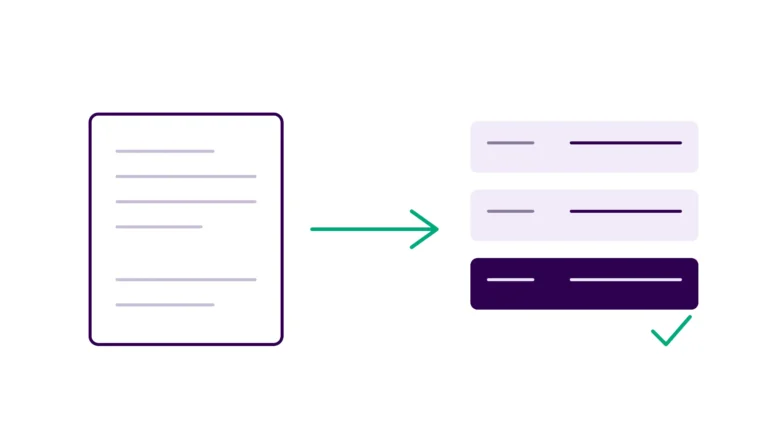
Start with a cost-mapped diagnostic. For each department, list every manual, screen-based process that a team performs on a recurring schedule. The 0.5 FTE gatekeeper rule is the practical filter: any process consuming less than half a full-time employee annually is below the threshold for systematic remediation, a minor inefficiency rather than a structural cost. Any process consuming 0.5 FTEs or more belongs on a prioritised remediation list. In mid-market service businesses running this diagnostic for the first time, it is common to find around 10 such processes — the count varies by sector and degree of technology fragmentation — adding up to an annual cost that has been sitting invisibly distributed across the headcount budget for years.
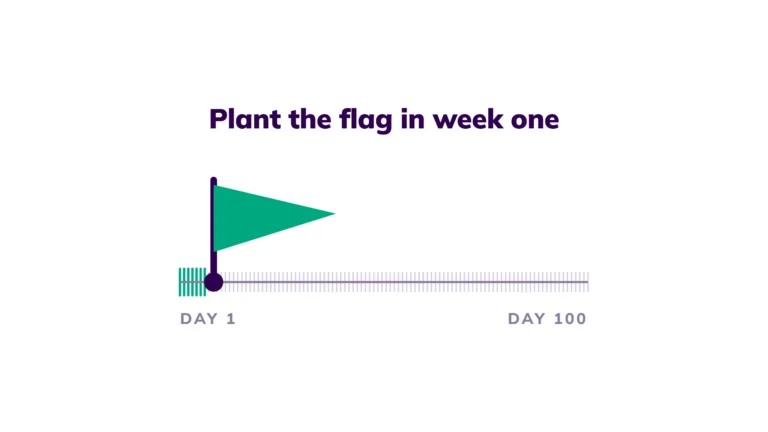
Build Quick Wins from the top of the list. The highest-cost processes — those consuming two or more FTEs annually — are the ones to address first. The goal in the first phase is measurable ROI within six weeks, using simpler automation approaches that can be built and deployed without a long implementation cycle. These Quick Wins serve two purposes: they generate savings that partially fund subsequent investment, and they demonstrate to the organisation that change is actually possible. Both purposes matter. The financial case is obvious; the organisational case is often underestimated. A team that has run on manual processes for five years needs to see a successful change before it will invest confidence in a broader programme.
Address the CDO gap directly. For most companies at Manual Wall scale, what is missing is not another technology project but someone with the mandate and remit to look at the operational architecture as a whole, identify where the business is paying people to do work that systems should be doing, and maintain accountability for the redesign over time. This is what the External CDO Partnership addresses: not a CTO function focused on system maintenance, but a strategic operational partner focused on whether the business is designed to generate leverage. The Workshop → Roadmap → Quick Wins → External CDO Partnership sequence is the practical path through. Each phase funds and justifies the next. The Strategic Diagnostic Workshop produces the prioritised Roadmap. The Roadmap guides the Quick Wins phase. The demonstrated ROI from Quick Wins justifies the ongoing partnership — which matters particularly for CEOs who have already had one expensive technology bet that didn’t deliver, and who need to see returns before committing to a longer programme.
What a Manual Wall company looks like from the outside
The financial signature is visible in aggregate before it is visible in any individual metric. Revenue per employee that is flat or declining year-on-year despite consistent revenue growth. EBITDA margin that was higher at a smaller revenue base and has not recovered as the business scaled. Headcount that has grown faster than revenue over a three-year period. Management reporting that consumes a meaningful fraction of someone’s week to assemble manually from sources that don’t connect.
Any one of these signals could have an innocent explanation. Three or four together, in a service business within this band, is almost always the Manual Wall. Revenue is growing and clients are being served, but the operational model is consuming a portion of every pound or dollar of revenue before it can compound into margin. That consumption grows in absolute terms with every new client onboarded, because the model for servicing them has not changed since the company was half its current size.
The question worth sitting with, for any CEO who recognises this description, is how much of the margin compression of the last three years is the wall, rather than market conditions or overhead creep. Running the Manual Wall Calculator on even two or three of the most obvious manual processes typically produces a number that changes the frame of the conversation entirely.