
When a mid-market digital transformation stalls, the post-mortem usually blames the technology, and the post-mortem is usually wrong. McKinsey’s research on tech-enabled transformations puts culture and talent among the top obstacles, ahead of the technology itself, and the pattern holds all the way down to companies a fraction of the size it studies. The hardest digital transformation challenges are rarely about which platform you picked. They are about whether the operation can actually carry the change once the platform is switched on.
That distinction matters because it changes what you spend money on. If the challenges are technical, you buy better technology. If the challenges are operational and human, better technology solves almost nothing, and the six-figure platform becomes the most expensive part of a problem it was never going to fix. Below are the challenges that actually decide whether a mid-market transformation delivers, in the rough order they tend to bite, and what each one asks of you.
The shape is recognisable across mid-market service businesses. A company that has grown to a few hundred people commits to a transformation, buys a capable platform after a careful selection, and eighteen months later the leadership team is quietly disappointed. The system works as advertised, the migration finished more or less on time, and the operating cost has barely moved, because the people who were moving data by hand before the project are still moving it by hand after it, now into a nicer interface. Nobody involved did anything obviously wrong. The project simply solved a challenge the business did not have and left the ones it did have untouched, and it is worth understanding why that keeps happening before committing the next budget to the same shape.
The technology is the easy part, which is why it distracts everyone
The technology decision is the one everyone feels qualified to have an opinion about, so it absorbs the attention. Vendors demo, committees compare features, and the project acquires the comforting shape of a procurement exercise with a clear finish line. Meanwhile the questions that decide the outcome go unasked, because they do not have a demo. Who is going to change how they work, and do they have the capacity to. What happens to the manual steps the new system does not cover. Whether anyone has put a number on the problem the platform is meant to solve.
None of that is a reason to ignore the technology. It is a reason to treat the platform decision as the smaller half of the project, and to spend the attention you save on the operational and human challenges that the vendor cannot sell you a fix for. The companies that struggle most are usually the ones that ran a rigorous software selection and no operational readiness check at all.
Your operation cannot absorb the change it is being asked to
The single most underpriced challenge is capacity to change. Gartner research reported by Harvard Business Review found that employees’ willingness to support enterprise change fell from 74 percent in 2016 to 43 percent in 2022, while the number of major changes the average employee faced rose from two a year to ten. A mid-market team living that reality does not need another transformation announcement; it needs the last three to have finished.
This is change fatigue, and it is a hard operational limit rather than a morale problem to be fixed with better communication. A team already running at capacity to keep the current process alive has no spare hours to learn a new one, so the transformation either stalls or gets absorbed as overtime that quietly erodes the margin it was supposed to protect. The way through is not a bigger push. It is smaller moves that each land and stick before the next one starts, so the team sees change working rather than accumulating.
The manual work the plan never touched
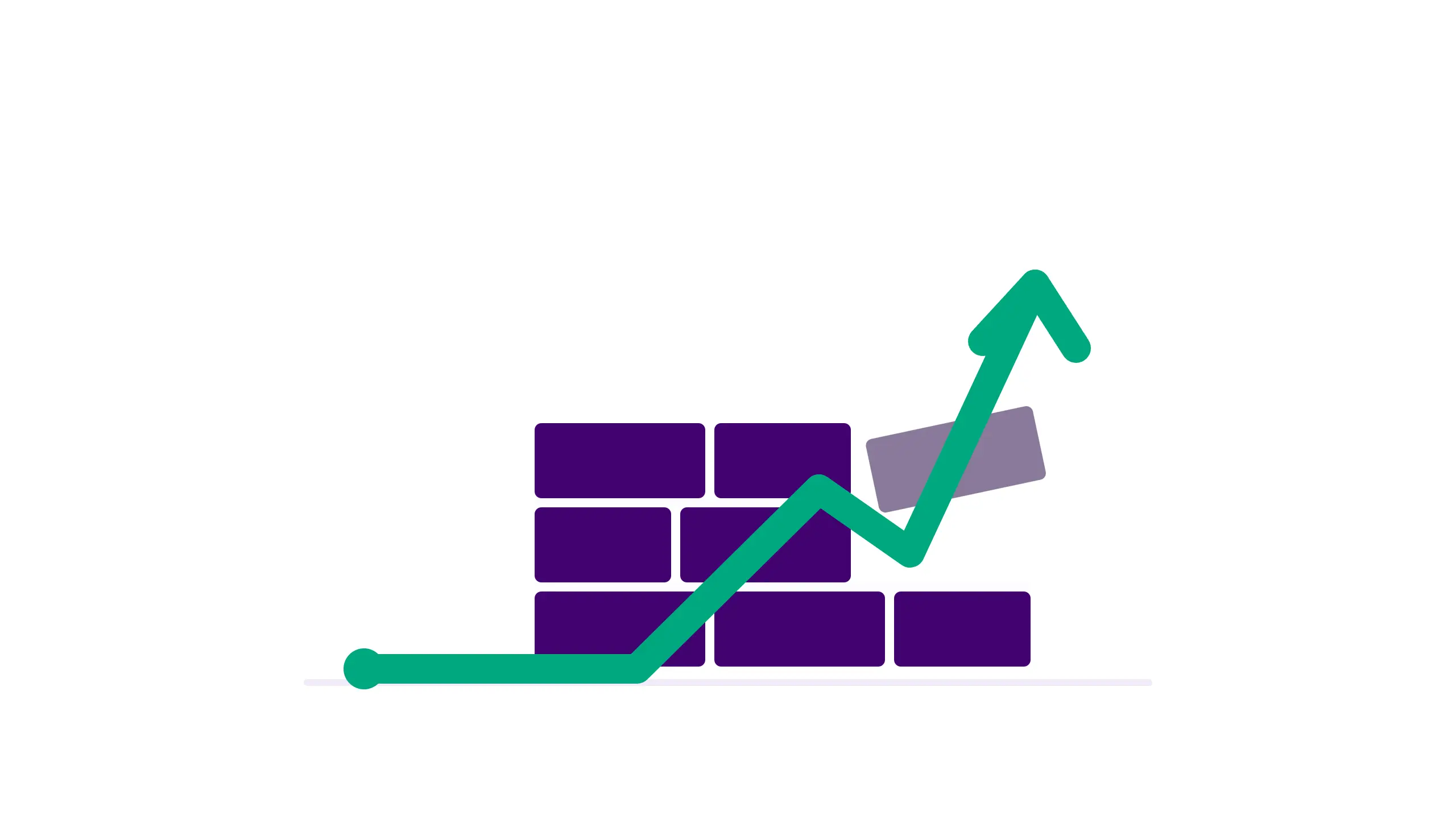
Most transformation plans assume the operation runs on systems. In a mid-market service business, a surprising share of it runs on people moving data between systems by hand, and the plan tends to route straight past that work because it is invisible on any org chart. At Digital Forms we call the ceiling this creates the Manual Wall: the point where the next increment of growth needs a disproportionate increment of headcount, because the work is stitched together by staff rather than software.
A transformation that installs a new platform on top of that manual layer inherits it. The people who were re-keying data between the old systems now re-key it into the new one, and the promised efficiency shows up in the demo but not in the payroll. The challenge here is diagnostic before it is technical, because until someone counts the hours going into the manual work and puts a cost on the Manual Wall, the plan cannot tell the difference between the steps worth automating and the ones that just feel painful.
Leadership cannot see the operation clearly enough to steer it
A transformation is hard to run when the people running it cannot see what is actually happening. In a lot of mid-market operations the numbers that should be a live dashboard are assembled by hand, a manager pulling figures from three systems into a spreadsheet every week, so every important question waits a day for someone to build the answer. We call the pattern Data Blindness: the business is not short of data, it is short of data anyone can see without manual effort.
That blindness compounds every other challenge here. You cannot sequence initiatives by return when you cannot see where the cost sits, and you cannot tell whether a change worked when the before-and-after has to be reconstructed from memory. A transformation that does not fix the visibility problem early ends up flying the whole programme on instruments that lag reality by a week, which is how a project drifts for months before anyone notices it has stopped delivering. Fixing it rarely needs a business-intelligence programme of its own, it needs the handful of numbers that actually run the operation to start updating themselves.
No single person owns the outcome
Mid-market companies almost always have a capable CTO or head of IT who owns the technology, and a CEO who owns the strategy, and nobody who owns the seam between them. That gap has a name, the CDO gap, and it is where transformations go to die quietly. The strategy assumes execution will happen, the technology function delivers the systems it was asked for, and the operational change that was supposed to connect the two belongs to everyone and therefore to no one.
The symptom most operators recognise is vendor sprawl: five suppliers each owning a slice of the stack, each doing their part competently, and no single person accountable for whether the business outcome actually arrives. Closing that gap does not always mean a permanent executive hire, which is often too heavy for the size of the business. It can mean one accountable owner engaged for as long as the transformation needs, which is the logic behind External CDO as a Service, an owner for the outcome rather than another adviser for the plan.
Nobody sequenced the work by what it returns
Even a transformation that clears the challenges above can fail on sequencing. When every initiative is treated as equally urgent, the project fans out across a dozen workstreams, the early months produce activity rather than results, and the appetite for the whole programme runs out before anything has paid for itself. The plan was comprehensive, and comprehensive is exactly the problem, because a mid-market business cannot fund a two-year programme on faith.
The discipline that prevents this is sequencing by return, biggest recoverable cost first, so the first change funds the next rather than competing with every other demand on the business. That requires knowing where the recoverable cost actually sits, which is what a Profit Leak Diagnostic is built to establish before anyone commits to a build, and it is why the first move we make is usually a single narrow Operations Sprint that gets one result live in weeks. A result on the board changes the politics of everything that follows.
The strategy was never going to execute itself
The last challenge is the one that connects all the others: the gap between a plan and its execution. Plenty of transformations have a genuinely good strategy and still deliver nothing, because the model that produced the strategy treated execution as someone else’s job. The deck was competent and the roadmap was sound, and neither touched the operation, so the business paid for the thinking and inherited the doing.
This has become the defining challenge as AI makes strategy cheaper to produce, a shift we have written about in why digital transformation consulting was built for a problem that no longer exists. The practical version for an operator is simple to state and hard to accept: the plan is the easy part now, and the money and the risk both sit in the execution. A transformation that is resourced as though the plan were the hard part has mislabelled its own challenge from the start.
AI has added a new pressure and a new way to waste money
The newest challenge is the pressure to be seen doing something with AI. Boards ask about it, competitors claim it, and the result is often a rush to adopt AI somewhere visible rather than where it would actually pay. Ungoverned AI is usually already in the building in any case, with staff quietly using whatever tools they can reach and no one accountable for where the data goes. The challenge is not whether to use AI, because you already are, but whether the adoption is pointed at a real operational cost or at the appearance of progress.
For a regulated mid-market operator the stakes are higher, which is why we have written separately about AI governance for regulated industries. The discipline is the same one that governs the rest of the transformation: point the tool at a measured cost, prove the return on one workflow, then put someone in charge of the risk before scaling it. AI does not change the challenges on this list; it raises the price of getting them wrong.
What actually gets a mid-market transformation through
None of these challenges is solved by a better platform, and most of them are made worse by a bigger plan. What gets a transformation through is a change of order. Measure the manual work and the recoverable cost before choosing technology. Sequence the initiatives so the first one pays for the second. Keep each move small enough that a fatigued team can absorb it, and put one person on the hook for the outcome rather than the plan.
None of that is exotic, and that is rather the point, because the reason mid-market transformations fail is almost never a missing insight. The moves that work are unglamorous and well understood, and they lose every internal argument to the platform decision, which feels more decisive and arrives with a vendor to champion it. Getting through the challenges on this list is less a matter of discovering something new than of spending the attention and the budget in the right order, on the operational readiness nobody demos rather than the software everybody does.
That order is also the honest reason so many mid-market transformations fail, and it is worth being direct about it, because we have written at length about why the six-figure tech project failed and the cause is almost never the one on the invoice. The technology usually worked. What was missing was a way to carry the change through an operation that was already full.
The useful question, before the next transformation, is not which platform to buy. It is whether the business has honestly counted the manual work, the change capacity, and the ownership gap it is about to test, because those are the challenges that will decide the outcome long after the platform decision is forgotten.